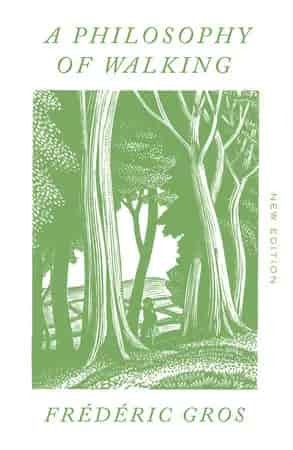
The first eternity we encounter is that of rocks, of the swooping contour of the plains, of the skylines: all… — Frederic Gros
The first eternity we encounter is that of rocks, of the swooping contour of the plains, of the skylines: all that is resistant, unchanging. ... You are facing a mountain, walking among great trees, and you think: they are just there. They are there, they didn’t expect me, they were always there. They were there long before me and they will still be there long after me.
La première éternité qu’on rencontre est celle des pierres, du mouvement des plaines, des lignes d’horizon : tout cela résiste. ... Je suis face à cette montagne, je marche au milieu des grands arbres et je pense : ils sont là. Ils sont là, ils ne m’ont pas attendu, là depuis toujours. Ils m’ont indéfiniment devancé, ils continueront bien après moi.
Source: Wikiquote · CC BY-SA 4.0
More from this book
You are nobody to the hills or the thick boughs heavy with greenery. You are no longer a role, or a status, not even an individual, but a body, a body that feels sharp stones on the paths, the caress of long grass and the freshness of the wind. When you walk, the world has neither present nor future: nothing but the cycle of mornings and evenings. Always the same thing to do all day: walk.
But walking causes absorption. Walking interminably, taking in through your pores the height of the mountains when you are confronting them at length, breathing in the shape of the hills for hours at a time during a slow descent. The body becomes steeped in the earth it treads. And thus, gradually, it stops being in the landscape: it becomes the landscape. That doesn’t have to mean dissolution, as if the walker were fading away to become a mere inflection, a footnote. It’s more a flashing moment: sudden flame, time catching fire. And here, the feeling of eternity is all at once that vibration between presences. Eternity, here, in a spark.
Perhaps the itinerant monks called ‘Gyrovagues’ were especially responsible for promoting this view of our condition as eternal strangers. They journeyed ceaselessly from monastery to monastery, without fixed abode, and they haven’t quite disappeared, even today: it seems there are still a handful tramping Mount Athos. They walk for their entire lives on narrow mountain paths, back and forth on a long repeated round, sleeping at nightfall wherever their feet have taken them; they spend their lives murmuring prayers on foot, walk all day without destination or goal, this way or that, taking branching paths at random, turning, returning, without going anywhere, illustrating through endless wandering their condition as permanent strangers in this profane world.