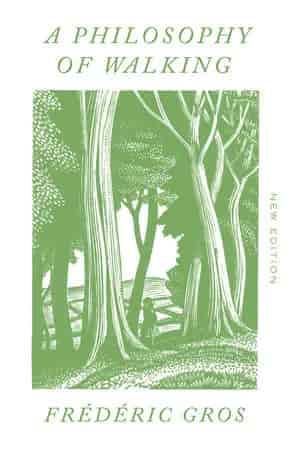
During long cross-country wanders, you do glimpse that freedom of pure renunciation. When you walk for a long… — Frederic Gros
During long cross-country wanders, you do glimpse that freedom of pure renunciation. When you walk for a long time, there comes a moment when you no longer know how many hours have passed, or how many more will be needed to get there; you feel on your shoulders the weight of the bare necessities, you tell yourself that’s quite enough – that really nothing more is needed to keep body and soul together – and you feel you could carry on like this for days, for centuries. You can hardly remember where you are going or why; that is as meaningless as your history, or what the time is. And you feel free, because whenever you remember the former signs of your commitments in hell – name, age, profession, CV – it all seems absolutely derisory, minuscule, insubstantial.
On entrevoit bien dans les randonnées longues, cette liberté toute de renoncement. Quand on marche depuis longtemps, il arrive un moment où on ne sait plus trop combien d’heures se sont déjà écoulées, ni combien il en faudra encore pour parvenir au terme, on sent sur ses épaules le poids du strict nécessaire, on se dit que c’est bien assez – si vraiment il faut davantage pour insister dans l’existence – et on sent qu’on pourrait continuer ainsi des jours, des siècles. C’est à peine alors si l’on sait où on va et pourquoi, cela ne compte pas plus que mon passé ou l’heure qu’il est. Et on se sent libre, parce que, dès qu’il s’agit de se rappeler les signes anciens de notre engagement dans l’enfer – nom, âge, profession, carrière –, tout, absolument, apparaît dérisoire, minuscule, fantomatique.
Source: Wikiquote · CC BY-SA 4.0
More from this book
You are nobody to the hills or the thick boughs heavy with greenery. You are no longer a role, or a status, not even an individual, but a body, a body that feels sharp stones on the paths, the caress of long grass and the freshness of the wind. When you walk, the world has neither present nor future: nothing but the cycle of mornings and evenings. Always the same thing to do all day: walk.
But walking causes absorption. Walking interminably, taking in through your pores the height of the mountains when you are confronting them at length, breathing in the shape of the hills for hours at a time during a slow descent. The body becomes steeped in the earth it treads. And thus, gradually, it stops being in the landscape: it becomes the landscape. That doesn’t have to mean dissolution, as if the walker were fading away to become a mere inflection, a footnote. It’s more a flashing moment: sudden flame, time catching fire. And here, the feeling of eternity is all at once that vibration between presences. Eternity, here, in a spark.
First of all, there is the suspensive freedom that comes by walking, even a simple short stroll: throwing of the burden of cares, forgetting business for a time. You choose to leave the once behind, go out, stroll around, think about other things. With a longer excursion of several days, the process of self-liberation is accentuated: you escape the constraints of work, throw of the yoke of routine.