
Eric R. Kandel
Quotes
The intellectual life of turn-of-the-century Vienna is in my blood: my heart beats in three-quarter time.
Much as Leonardo da Vinci and other Renaissance artists used the revelations of human anatomy to help them depict the body more accurately and compellingly, so, too, many contemporary artists may create new forms of representation in response to revelations about how the brain works.
The portraits of the Viennese modernists, with their conscious and dramatic attempts to depict their subject's inner feelings, represent an ideal example of how psychological and biological insights can enrich our relationship with art.
This dialogue between the ongoing research in brain science and art continue to this day. ...Such dialogues could help us explore the mechanisms in the brain that make perception and creativity possible, whether in art, the sciences, the humanities, or everyday life. In a larger sense, this dialogue could help make science part of our everyday experience.
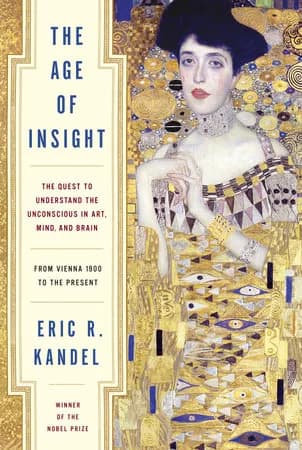
The Age of Insight is a product of my subsequent fascination with the intellectual history of Vienna from 1890 to 1918, as well as my interest in Austrian modernist art, psychoanalysis, art history, and the brain science that is my life's work. In this book I examine the ongoing dialogue between art and science that had its origins in fin-de-siècle Vienna...
The function of the modern artist was not to convey beauty, but to convey new truths.
A brain scan may reveal the neural signs of depression, but a Beethoven symphony reveals what that depression feels like. Both perspectives are necessary if we are to fully grasp the nature of mind, yet they are rarely brought together.
I outline in simple terms... our current understanding of the cognitive psychological and neurobiological basis of perception, memory, emotion, empathy, and creativity. ...the principles of the viewer's response to art are applicable to all periods of painting.
The Vienna School of Art History, influenced in part by Sigmund Freud's psychological work, began to develop a science-based psychology of art that was initially focused on the beholder. Today, the new science of mind has... again focused on the beholder.
One of the characteristic features of Viennese life at this time was the continual, easy interaction of artists, writers, and thinkers with scientists.
That’s all the quotes.
10 quotes in the collection · come back when we add more