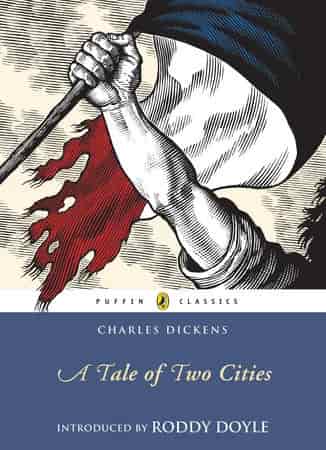
It was too much the way of Monseigneur under his reverses as a refugee, and it was much too much the way of… — Charles Dickens
It was too much the way of Monseigneur under his reverses as a refugee, and it was much too much the way of native British orthodoxy to talk of this terrible Revolution as if it were the one [and] only harvest ever known under the skies that had not been sown—as if nothing had ever been done, or omitted to be done, that had led to it—as if observers of the wretched millions in France, and of the misused and perverted resources that should have made them prosperous, had not seen it inevitably coming years before, and had not in plain words recorded what they saw. Such vapouring, combined with the extravagant plots of Monseigneur for the restoration of a state of things that had utterly exhausted itself, and worn out Heaven and earth as well as itself, was hard to be endured without some remonstrance by any sane man who knew the truth.
Source: Wikiquote · CC BY-SA 4.0
More from this book
I see that I hold a sanctuary in their hearts, and in the hearts of their descendants, generations hence. I see her, an old woman, weeping for me on the anniversary of this day. I see her and her husband, their course done, lying side by side in their last earthly bed, and I know that each was not more honoured and held sacred in the other's soul, than I was in the souls of both.
I see the lives for which I lay down my life, peaceful, useful, prosperous and happy, in that England which I shall see no more.
I see a beautiful city and a brilliant people rising from this abyss, and, in their struggles to be truly free, in their triumphs and defeats, through long years to come, I see the evil of this time and of the previous time of which this is the natural birth, gradually making expiation for itself and wearing out.