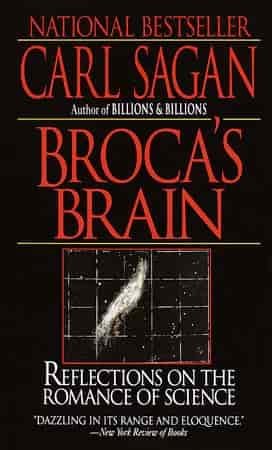
The First Amendment to the United States Constitution encourages a diversity of religions but does not… — Carl Sagan
The First Amendment to the United States Constitution encourages a diversity of religions but does not prohibit criticism of religion. In fact it protects and encourages criticism of religion. Religions ought to be subject to at least the same degree of skepticism as, for example, contentions about UFO visitations or Velikovskian catastrophism. I think it is healthy for the religions themselves to foster skepticism about the fundamental underpinnings of their evidential bases. There is no question that religion provides a solace and support, a bulwark in time of emotional need, and can serve extremely useful social roles. But it by no means follows that religion should be immune from testing, from critical scrutiny, from skepticism. It is striking how little skeptical discussion of religion there is in the nation that Tom Paine, the author of The Age of Reason, helped to found. I hold that belief systems that cannot survive scrutiny are probably not worth having.
p. 338Source: Wikiquote · CC BY-SA 4.0
More from this book
Much of human history can, I think, be described as a gradual and sometimes painful liberation from provincialism, the emerging awareness that there is more to the world than was generally believed by our ancestors.
p. 240
I believe that the extraordinary should certainly be pursued. But extraordinary claims require extraordinary evidence.
p. 73
All inquiries carry with them some element of risk. There is no guarantee that the universe will conform to our predispositions. But I do not see how we can deal with the universe—both the outside and the inside universe—without studying it. The best way to avoid abuses is for the populace in general to be scientifically literate, to understand the implications of such investigations. In exchange for freedom of inquiry, scientists are obliged to explain their work. If science is considered a closed priesthood, too difficult and arcane for the average person to understand, the dangers of abuse are greater. But if science is a topic of general interest and concern—if both its delights and its social consequences are discussed regularly and competently in the schools, the press, and at the dinner table—we have greatly improved our prospects for learning how the world really is and for improving both it and us.
p. 13