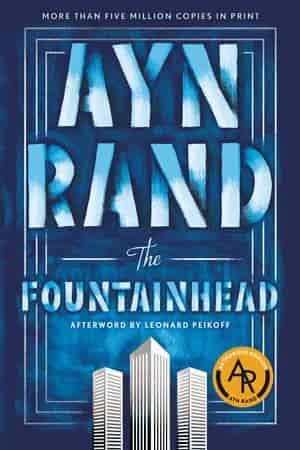
Ayn Rand
Quotes
"She knew that even pain can be confessed, but to confess happiness is to stand naked, delivered to the witness, yet they could let each other see it without need of protection."
p. 725
The luxury was secondary, a background so proper to him that it could be ignored. The man humbled his own wealth. She had seen people of wealth, stiff and awed before that which represented their ultimate goal. The splendor of this place was not the aim, not the final achievement of the man who leaned casually across the table. She wondered what his aim had been.
p. 477
"Every form of happiness is private. Our greatest moments are personal, self-motivated, not to be touched. […] I think the only cardinal evil on earth is that of placing your prime concern within other men. I've always demanded a certain quality in the people I liked. I've always recognized it at once—and it's the only quality I respect in men. I chose my friends by that. Now I know what it is. A self-sufficient ego. Nothing else matters."
p. 660
"Listen to what is being preached today. Look at everyone around us. You've wondered why they suffer, why they seek happiness and never find it. If any man stopped and asked himself whether he's ever held a truly personal desire, he'd find the answer. He'd see that all his wishes, his efforts, his dreams, his ambitions are motivated by other men. He's not really struggling even for material wealth, but for the second-handers delusion—prestige. A stamp of approval, not his own. He can find no joy in the struggle and no joy when he has succeeded. He can't say about a single thing: 'This is what I wanted because I wanted it, not because it made my neighbors gape at me.' Then he wonders why he's unhappy."
p. 660
I am Gail Wynand, the man who has committed every crime except the foremost one: that of ascribing futility to the wonderful fact of existence and seeking justification beyond myself.
p. 595
"I don't make comparisons. I never think of myself in relation to anyone else. I just refuse to measure myself as part of anything."
p. 631
"I would give the greatest sunset in the world for one sight of New York's skyline. Particularly when one can't see the details. Just the shapes. The shapes and the thought that made them. The sky over New York and the will of man made visible. What other religion do we need? And then people tell me about pilgrimages to some dank pesthole in a jungle where they go to do homage to a crumbling temple, to a leering stone monster with a pot belly, created by some leprous savage. Is it beauty and genius they want to see? Do they seek a sense of the sublime? Let them come to New York, stand on the shore of the Hudson, look and kneel. When I see the city from my window—no, I don't feel how small I am—but I feel that if a war came to threaten this, I would like to throw myself into space, over the city, and protect these buildings with my body."
p. 478
"And isn't that the root of every despicable action? Not selfishness, but precisely the absence of a self."
p. 658
"You'll get everything society can give a man. You'll keep all the money. You'll take any fame or honor anyone might want to grant. You'll accept such gratitude as the tenants might feel. And I—I'll take what nobody can give a man, except himself. I will have built Cortlandt."
"You’re getting more than I am, Howard."
p. 630
"You can't fight him on his terms. You're only a tank—and that's a very clean, innocent weapon. An honest weapon that goes first, out in front, and mows everything down or takes every counterblow. He's a corrosive gas. The kind that eats lungs out."
p. 536
She thought how strange it would be if she ever said "Hello" to him; one did not greet oneself each morning.
p. 494
"One loses everything when one loses one's sense of humor."
p. 620