I love every "lib" movement there is, because after the "lib" the things that were always a mystique become… — Andy Warhol
I love every "lib" movement there is, because after the "lib" the things that were always a mystique become understandable and boring, and then nobody has to feel left out if they're not part of what is happening. For instance, single people looking for husbands and wives used to feel left out because the image marriage had in the old days was so wonderful. w:Jane Wyatt and Robert Young. w:Nick and Nora Charles, Ethel and Fred Mertz, Dagwood and Blondie.
Source: Wikiquote · CC BY-SA 4.0
More from this book
What's great about this country is that America started the tradition where the richest consumers buy essentially the same things as the poorest. You can be watching TV and see Coca-Cola, and you know that the President drinks Coke, Liz Taylor drinks Coke, and just think, you can drink Coke, too. A Coke is a Coke and no amount of money can get you a better Coke than the one the bum on the corner is drinking. All the Cokes are the same and all the Cokes are good. Liz Taylor knows it, the President knows it, the bum knows it, and you know it.
I know a girl who just looks at her face in the medicine cabinet mirror and never looks below her shoulders, and she's four or five hundred pounds but she doesn't see all that, she just sees a beautiful face and therefore she thinks she's a beauty. And therefore, I think she's a beauty, too, because I usually accept people on the basis of their self-images, because their self-images have more to do with the way they think than their objective-images do.
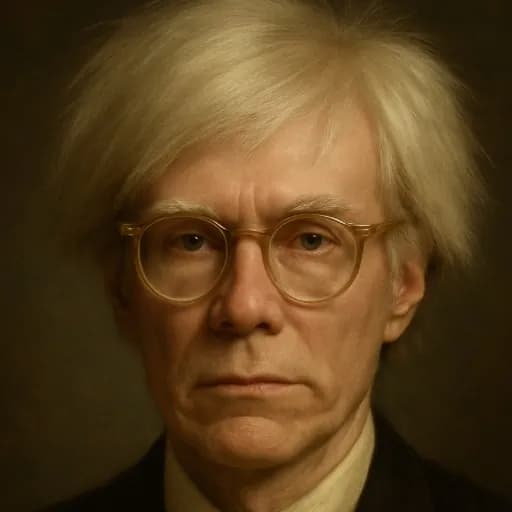
I thought that young people had more problems than old people, and I hoped I could last until I was older so I wouldn't have all those problems. Then I looked around and saw that everybody who looked young had young problems and that everybody who looked old had old problems. The "old" problems to me looked easier to take than the "young" problems. So I decided to go gray so nobody would know now old I was and I would look younger to them than how old they thought I was. I would gain a lot by going gray: (1) I would have old problems, which were easier to take than young problems, (2) everyone would be impressed by how young I looked, and (3) I would be relieved of the responsibility of acting young—I could occasionally lapse into eccentricity or senility and no one would think anything of it because of my gray hair. When you've got gray hair, every move you make seems "young" and "spry," instead of just being normally active. It's like you're getting a new talent. So I dyed my hair gray when I was about twenty-three or twenty-four.