Quotes
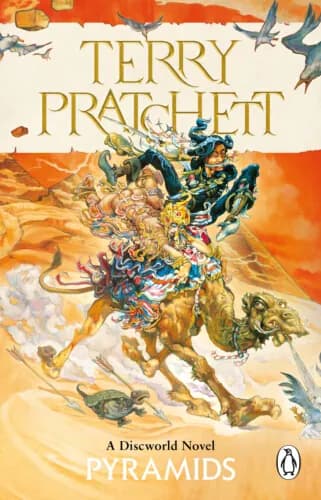
Battle elephants! Teppic groaned. Tsort went in for battle elephants, too. Battle elephants were the fashion lately. They weren't much good for anything except trampling on their own when they inevitably panicked, so the military minds on both sides had responded by breeding bigger elephants. Elephants were impressive. (p. 256)
And now everyone returning from an armed conflict is called a hero too. In the old days you had to commit specific acts of valor during war; now you just need to turn up. These days when a war is on, heroism seems to mean 'attendance.'
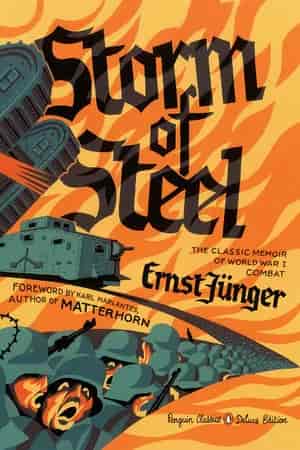
We had come from lecture halls, school desks and factory workbenches, and over the brief weeks of training, we had bonded together into one large and enthusiastic group. Grown up in an age of security, we shared a yearning for danger, for the experience of the extraordinary. We were enraptured by war.
Throughout the war, it was always my endeavour to view my opponent without animus, and to form an opinion of him as a man on the basis of the courage he showed. I would always try and seek him out in combat and kill him, and I expected nothing else from him. But never did I entertain mean thoughts of him. When prisoners fell into my hands, later on, I felt responsible for their safety, and would always do everything in my power for them.
In war you learn thoroughly, but the tuition fees are high.
“Creatures trained in warfare are what he calls ‘philosophically anti-life.’”
p. 110
“And, as a result of this examination,” the forked pink beard smiled down gently from above, “the specialists discovered that what you call the human race was nonviable. That is, while the individuals composing it had strongly developed instincts of self-preservation, the species as a whole was suicidal.”
“Suicidal!” I found myself breathing up with rest.
“Quite. This is a matter on which there can be little argument from the more honest among you. High civilization is a product of communal living and Man, in groups, has always tended to wipe himself out. In fact, a large factor in the development of what little civilization you do experience has been the rewards contingent upon the development of mass-destruction weapons.”
p. 144
[...] science devises ever bloodier means of war until humanity’s powers of destruction overcome our powers of creation and our civilisation drives itself to extinction. [...] Our will to power, our science, and those v. faculties that elevated us from apes, to savages, to modern man , are the same faculties that'll snuff out Homo sapiens before this century is out!
p. 444
Another war is always coming, Robert. They are never properly extinguished. What sparks war? The will to power, the backbone of human nature. The threat of violence, the fear of violence, or actual violence, is the instrument of this dreadful will… The nation state is merely human nature inflated to monstrous proportions. QES, nations are entities whose laws are written by violence. Thus it ever was, so ever shall it be.
p. 444
"Oh, diplomacy," said M.D., in his element, "it mops up war’s spillages; legitimizes its outcomes; gives the strong state the means to impose its will on a weaker one, while saving its fleets and battalions for weightier opponents."
p. 444
“Nothing lasts,” he said, his voice guttural with age and remembered pain. “Neither knowledge, nor skill, nor family, nor the bond between master and student. In another thousand years I will be gone. And in time you both will pass as well, and this place will be dust. For all that we pride ourselves on our power and our length of years, Prince Kai, ultimately dragons too are as fleeting as fireflies. There was a time when we never existed; there will also come a time when nobody will remember us. War changes to peace. But, ultimately, peace collapses into war and the cycle continues.”
“I’ve told you before, sir, you will be remembered as long as my fathers kingdom lasts.” Shan Yuan spoke with affection, clearly repeating an old reassurance.
“That’s not as reassuring as you might think.”
p. 135
“There is no truth to peace,” she said. “Peace is at best a brief interlude between hostilities. The treaties which might be signed here are no more than lies. The field of battle is more honest.”
p. 209