Quotes
No legend told its children of beautiful princesses falling in love with conscientious objectors.
In the past, socializing men to become the best killer-protectors led to the survival of the “fittest.” In the future, with nuclear technology, training killers is more likely to lead to the destruction of everyone.
Societies in which men were unwilling to dispose of themselves in war were societies that usually got disposed of. Societies that were protected were protected by killers, which is why I call the traditional role of men the role of killer-protector.
"I'm a warrior. I was brought up as a warrior. I didn't have toys, I had weapons. I slept with a wooden sword until I was five. My first books were medieval demonologies with illuminated pages. The first songs I learned were chants to banish demons. I know what brings me peace, and it isn't sandy beaches or chirping birds in rain forests. I want a weapon in my hand and a strategy to win."
"So you're saying what brings you peace is war."
"Now you get it."
When men unnaturally fight against their own countrymen, they are always observed to be more unnaturally cruel and filled with rage than they are against any other enemy.
War is a dreadful thing; and it is appalling to know how the English were obliged, next morning, to kill those prisoners mortally wounded, who yet writhed in agony upon the ground; how the dead upon the French side were stripped by their own countrymen and countrywomen, and afterwards buried in great pits; how the dead upon the English side were piled up in a great barn, and how their bodies and the barn were all burned together. It is in such things, and in many more much too horrible to relate, that the real desolation and wickedness of war consist. Nothing can make war otherwise than horrible. But the dark side of it was little thought of and soon forgotten; and it cast no shade of trouble on the English people, except on those who had lost friends or relations in the fight. They welcomed their King home with shouts of rejoicing, and plunged into the water to bear him ashore on their shoulders, and flocked out in crowds to welcome him in every town through which he passed, and hung rich carpets and tapestries out of the windows, and strewed the streets with flowers, and made the fountains run with wine, as the great field of Agincourt had run with blood.
Some became Crusaders for the love of change; some, in the hope of plunder; some, because they had nothing to do at home; some, because they did what the priests told them; some, because they liked to see foreign countries; some, because they were fond of knocking men about, and would as soon knock a Turk about as a Christian.
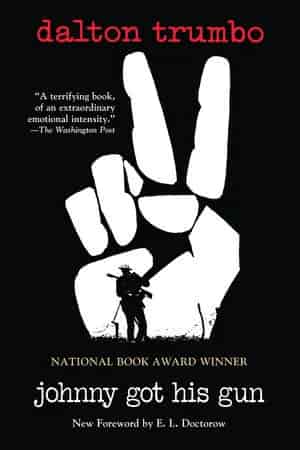
There's nothing noble about dying. Not even if you die for honor. Not even if you die the greatest hero the world ever saw. Not even if you're so great your name will never be forgotten and who's that great? The most important thing is your life, little guys. You're worth nothing dead except for speeches. Don't let them kid you any more. Pay no attention when they tap you on the shoulder and say come along we've got to fight for liberty, or whatever their word is. There's always a word.
It should be our endeavour to cultivate the peace and friendship of every nation, even of that which has injured us most, when we shall have carried our point against her. Our interest will be to throw open the doors of commerce, and to knock off all its shackles, giving perfect freedom to all persons for the vent of whatever they may chuse to bring into our ports, and asking the same in theirs. Never was so much false arithmetic employed on any subject, as that which has been employed to persuade nations that it is their interest to go to war.
p. 189
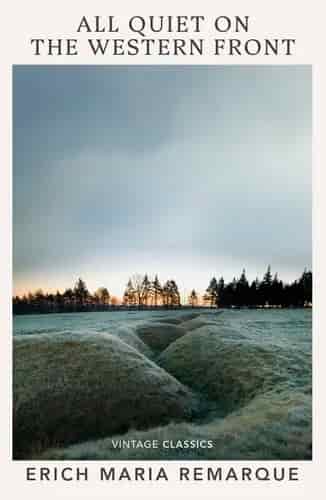
This book is to be neither an accusation nor a confession, and least of all an adventure, for death is not an adventure to those who stand face to face with it. It will try simply to tell of a generation of men who, even though they may have escaped shells, were destroyed by the war.
I often sit over against myself, as before a stranger, and wonder how the unnameable active principle that calls itself to life has adapted itself even to this form. All other expressions live in a winter sleep, life is simply one continual watch against the menace of death;—it has transformed us into unthinking animals in order to give us the weapon of instinct—it has reinforced us with dullness, so that we do not go to pieces before the horror, which would overwhelm us if we had clear, conscious thought—it has awakened in us the sense of comradeship, so that we escape the abyss of solitude—it has lent us the indifference of wild creatures, so that in spite of all, we perceive the positive in every moment, and store it up as a reserve against the onslaught of nothingness.
p. 273
He fell in October 1918, on a day that was so quiet and still on the whole front, that the army report confined itself to the single sentence: All quiet on the Western Front.
He had fallen forward and lay on the earth as though sleeping. Turning him over one saw that he could not have suffered long; his face had an expression of calm, as though almost glad the end had come.
p. 296