Quotes about tyranny
89 quotes · 56 authors
Quotes
Fascism is a religion of the state. It assumes the organic unity of the body politic and longs for a national leader attuned to the will of the people. It is totalitarian in that it views everything as political and holds that any action by the state is justified to achieve the common goal. It takes responsibility for all aspects of life, including our health and well-being, and seeks to impose uniformity of thought and action, whether by force or through regulation and social pressure. Everything, including economy and religion, must be aligned with its objectives. Any rival identity is part of the "problem" and therefore defined as the enemy. I will argue that contemporary American liberalism embodies all of these aspects of fascism... You can see why the Marxist left would resist the idea that Hitler was a revolutionary. Because if he was, then either Hitler was a force for good, or revolutions can be bad.
p. 63
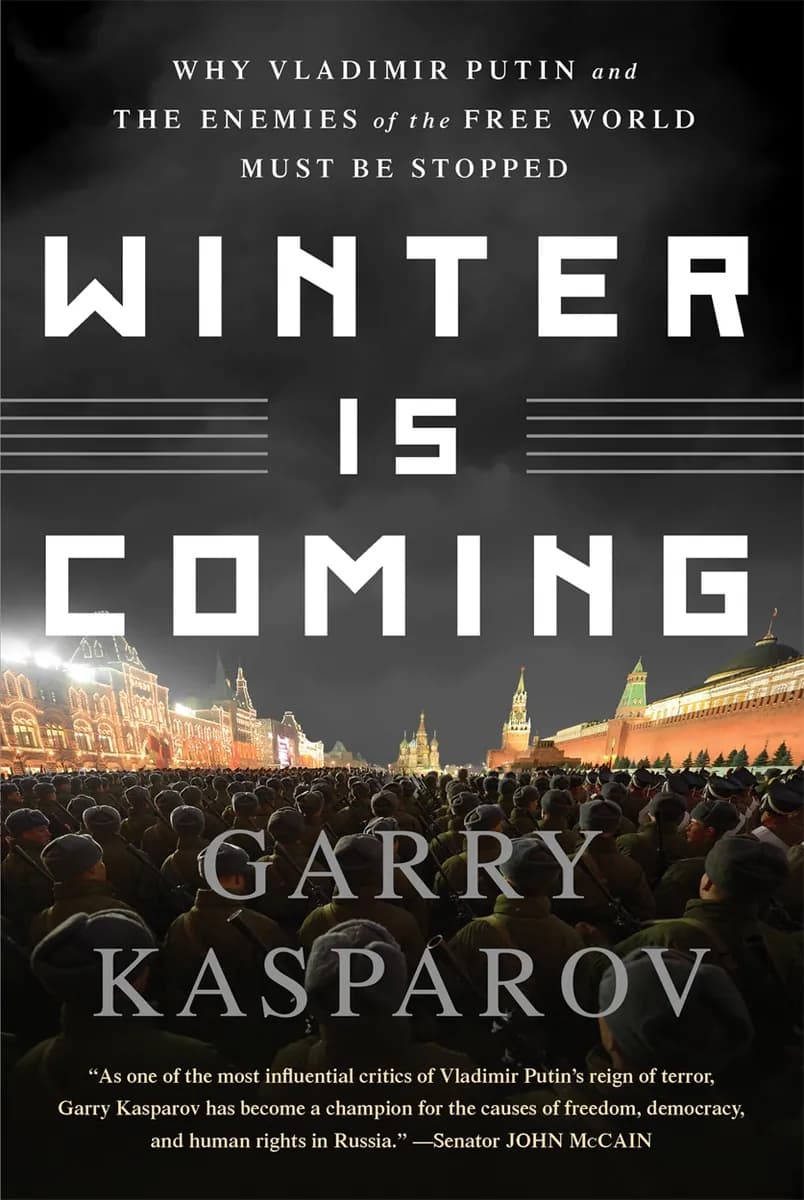
Somehow people always forget that it's much easier to install a dictator than to remove one.
In order for the wheel to turn, for life to be lived, impurities are needed, and the impurities of impurities in the soil, too, as is known, if it is to be fertile. Dissension, diversity, the grain of salt and mustard are needed: Fascism does not want them, forbids them, and that’s why you’re not a Fascist; it wants everybody to be the same, and you are not. But immaculate virtue does not exist either, or if it exists it is detestable.
We are contrary creatures, us humans, but that isn't something we need be afraid of, or even much troubled by. And if you make a list of those people who worship consistency, you'll find they're one and all tyrants or would-be tyrants. Ruling over thousands, or over a husband or a wife, or some cowering child. Never fear contradiction, Cutter, it is the very heart of diversity.
Civilization after civilization, it is the same. The world falls to tyranny with a whisper. The frightened are ever keen to bow to a perceived necessity, in the belief that necessity forces conformity, and conformity a certain stability. In a world shaped into conformity, dissidents stand out, are easily branded and dealt with. There is no multitude of perspectives, no dialogue. The victim assumes the face of the tyrant, self-righteous and intransigent, and wars breed like vermin. And people die.
“What do you mean by a tyrant?”
“One whose blood was poisoned by the ambition to rule over others.”
p. 309
Under a tyranny, most friends are a liability. One quarter of them turn "reasonable" and become your enemies, one quarter are afraid to speak, and one quarter are killed and you die with them. But the blessed final quarter keep you alive.
"No one abhors violence more than I do. Still, you can't make an omelet without breaking eggs—"
"Hell and damnation!"
"Why, Pater!"
"Don't call me 'Pater'! If I ever hear that 'can't make an omelet' phrase again, I'll start doing a little murder myself! It's used to justify every atrocity under every despotism, Fascist or Nazi or Communist or American labor war. Omelet! Eggs! By God, sir, men's souls and blood are not eggshells for tyrants to break!"
So debated Doremus, like some hundreds of thousands of other craftsmen, teachers, lawyers, what-not, in some dozens of countries under a dictatorship, who were aware enough to resent the tyranny, conscientious enough not to take its bribes cynically, yet not so abnormally courageous as to go willingly to exile or dungeon or chopping-block—particularly when they "had wives and families to support."
"Why are you so afraid of the word 'Fascism,' Doremus? Just a word—just a word! And might not be so bad, with all the lazy bums we got panhandling relief nowadays, and living on my income tax and yours—not so worse to have a real Strong Man, like Hitler or Mussolini—like Napoleon or Bismarck in the good old days—and have 'em really run the country and make it efficient and prosperous again. 'Nother words, have a doctor who won't take any back-chat, but really boss the patient and make him get well whether he likes it or not!"
I'm not a tyrant, but I can't afford to be merciful. Whatever it is necessary to do, I will do it.
The King is an absolute monarch, and I mean absolute. Whatever he says, goes. There’s no council of nobles, no senate, nothing that remotely challenges the King’s authority. He’s got courtiers and bureaucrats, sure, but the whole empire is essentially his own private property, to rule as he pleases.
It sounds like a recipe for disaster. Certainly such an arrangement always has been, in historical times. No empire can hope to have an unbroken string of capable rulers. This king or that one might be all right, and maybe as much as a century can go along without any troublemakers reaching the throne. But sooner or later some madman is bound to come along, a Nero or a Caligula or a Hitler, somebody who won’t be able to handle absolute power, who runs amok and causes terrible chaos.
p. 51