


Quotes about terrorism
23 quotes · 15 authors
Quotes
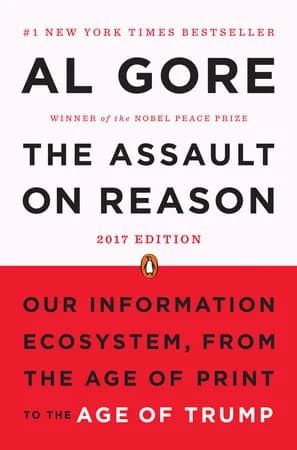
Terrorism relies on the stimulation of fear for political ends. Indeed, its specific goal is to distort the political reality of a nation by creating fear in the general population that is hugely disproportionate to the actual danger that the terrorists are capable of posing. Ironically, President Bush's response to the terrorist attack of September 11 was, in effect, to further distort America's political reality by creating a new fear of Iraq that was hugely disproportionate to the actual danger Iraq was capable of posing.
September 11 had a profound impact on all of us. But after initially responding in an entirely appropriate way, the administration began to heighten and distort public fear of terrorism to create a political case for attacking Iraq. Despite the absence of proof, Iraq was said to be working hand in hand with al-Qaeda and to be on the verge of a nuclear weapons capability. Defeating Saddam was conflated with bringing war to the terrorists, even though it really meant diverting attention and resources from those who actually attacked us.
When the president of the United States stood before the people of this nation and invited us to "imagine" a terrorist attack with a nuclear weapon, he was referring to terrorists who actually had no connection to Iraq. But because our nation had been subjected to the horrors of 9/11, when our president said "imagine with me this new fear," it was easy enough to bypass the reasoning process that might otherwise have led people to ask, "Wait a minute, Mr. President, where's your evidence?"
It is well documented that humans are especially fearful of threats that can be easily pictured or imagined. For example, one study found that people are willing to spend significantly more for flight insurance that covers "death by terrorism" than for flight insurance that covers "death by any cause." Now, logically, flight insurance for death by any cause would cover terrorism in addition to a number of other potential problems. But something about the buzzword terrorism creates a vivid impression that generates excessive fear.
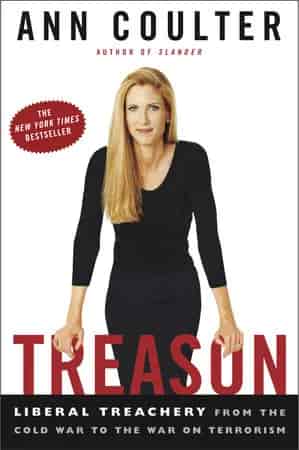
The Times was rushing to assure its readers that "prominent Islamic scholars and theologians in the West say unequivocally that nothing in Islam countenances the Sept. 11 actions." (That's if you set aside Muhammad's many specific instructions to kill nonbelievers whenever possible).
One hundred percent of terrorist attacks on commercial airlines based in America for 20 years have been committed by Muslims. When there is a 100 percent chance, it ceases to be a profile. It's called a 'description of the suspect.'
p. 265
'Terror can be very efficient against a reactionary class which does not want to leave the scene of operations. Intimidation is a powerful weapon of policy, both internationally and internally. War, like revolution, is founded upon intimidation.
In whichever way a democratic system might be sick, terrorism does not heal it; it kills it. Democracy is healed with democracy.
Let us turn now to the most elementary principle of just war theory, universality. Those who cannot accept this principle should have the decency to keep silent about matters of right and wrong, or just war. If we can rise to this level, some obvious questions arise: for example, have Cuba and Nicaragua been entitled to set off bombs in Washington, New York, and Miami in self-defense against ongoing terrorist attack? Particularly so when the perpetrators are well known and act with complete impunity, sometimes in brazen defiance of the highest international authorities, so that the cases are far clearer than Afghanistan? If not, why not?
If we like them, they're freedom fighters, she thought. If we don't like them, they're terrorists. In the unlikely case we can't make up our minds, they're temporarily only guerrillas.
p. 55
Assaults and terrorism in indiscriminate form should not be employed.
Acts of sabotage are very important. It is necessary to distinguish clearly between sabotage, a revolutionary and highly effective method of warfare, and terrorism, a measure that is generally ineffective and in-discriminate in its results, since it often makes victims of innocent people and destroys a large number of lives that would be valuable to the revolution. Terrorism should be considered a valuable tactic when it is used to put to death some noted leader of the oppressing forces well known for his cruelty, his efficiency in repression, or other quality that makes his elimination useful. But the killing of persons of small importance is never advisable, since it brings on an increase of reprisals, including deaths.









That’s all the quotes.
11 quotes in the collection · come back when we add more