Quotes
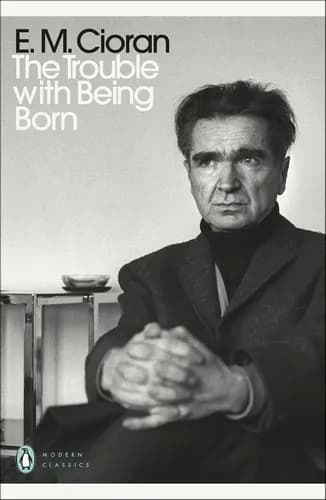
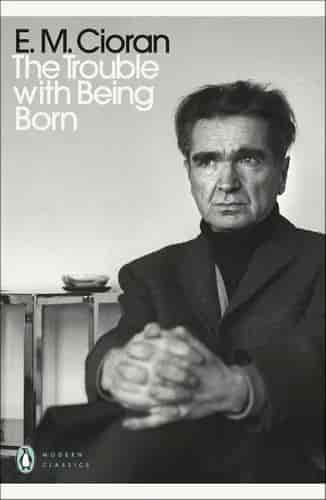
Everything turns on pain; the rest is accessory, even nonexistent, for we remember only what hurts. Painful sensations being the only real ones, it is virtually useless to experience others.
What is that one crucifixion compared to the daily kind any insomniac endures?
At this very moment, I am suffering — as we say in French, j'ai mal. This event, crucial for me, is nonexistent, even inconceivable for anyone else, for everyone else. Except for God, if that word can have a meaning.
But where is the antidote for lucid despair, perfectly articulated, proud, and sure? All of us are miserable, but how many know it? The consciousness of misery is too serious a disease to figure in an arithmetic of agonies or in the catalogues of the Incurable. It belittles the prestige of hell, and converts the slaughterhouses of time into idyls. What sin have you committed to be born, what crime to exist? Your suffering like your fate is without motive. To suffer, truly to suffer, is to accept the invasion of ills without the excuse of causality, as a favor of demented nature, as a negative miracle. . .
Far from diminishing the appetite for power, suffering exasperates it; hence the mind feels more comfortable in the society of a braggart than in that of a martyr; and nothing is more repugnant to it than the spectacle of dying for an idea.
The sports of the young savage involve long fasting, blows, burns, and fatigue of every kind, a proof that even pain has a charm of its own, which may remove its bitterness.
Man is born to suffer; pain is the means of his preservation. His childhood is happy, knowing only pain of body. These bodily sufferings are much less cruel, much less painful, than other forms of suffering, and they rarely lead to self-destruction. It is not the twinges of gout which make a man kill himself, it is mental suffering that leads to despair. We pity the sufferings of childhood; we should pity ourselves; our worst sorrows are of our own making.
I shall not take pains to prevent Emile hurting himself; far from it, I should be vexed if he never hurt himself, if he grew up unacquainted with pain. To bear pain is his first and most useful lesson. It seems as if children were small and weak on purpose to teach them these valuable lessons without danger. The child has such a little way to fall he will not break his leg; if he knocks himself with a stick he will not break his arm; if he seizes a sharp knife he will not grasp it tight enough to make a deep wound. So far as I know, no child, left to himself, has ever been known to kill or maim itself, or even to do itself any serious harm, unless it has been foolishly left on a high place, or alone near the fire, or within reach of dangerous weapons. What is there to be said for all the paraphernalia with which the child is surrounded to shield him on every side so that he grows up at the mercy of pain, with neither courage nor experience, so that he thinks he is killed by a pin-prick and faints at the sight of blood? With our foolish and pedantic methods we are always preventing children from learning what they could learn much better by themselves, while we neglect what we alone can teach them. Can anything be sillier than the pains taken to teach them to walk, as if there were any one who was unable to walk when he grows up through his nurse's neglect?
Instead of keeping him mewed up in a stuffy room, take him out into a meadow every day; let him run about, let him struggle and fall again and again, the oftener the better; he will learn all the sooner to pick himself up. The delights of liberty will make up for many bruises. My pupil will hurt himself oftener than yours, but he will always be merry; your pupils may receive fewer injuries, but they are always thwarted, constrained, and sad. I doubt whether they are any better off.
When you reached the age of reason, I secured you from the influence of human prejudice; when your heart awoke I preserved you from the sway of passion. Had I been able to prolong this inner tranquillity till your life's end, my work would have been secure, and you would have been as happy as man can be; but, my dear Emile, in vain did I dip you in the waters of Styx, I could not make you everywhere invulnerable; a fresh enemy has appeared, whom you have not yet learnt to conquer, and from whom I cannot save you. That enemy is yourself. Nature and fortune had left you free. You could face poverty, you could bear bodily pain; the sufferings of the heart were unknown to you; you were then dependent on nothing but your position as a human being; now you depend on all the ties you have formed for yourself; you have learnt to desire, and you are now the slave of your desires. Without any change in yourself, without any insult, any injury to yourself, what sorrows may attack your soul, what pains may you suffer without sickness, how many deaths may you die and yet live! A lie, an error, a suspicion, may plunge you in despair.
The more intelligent a man is the more capable is he of suffering.
p. 19
"God? What has God to do with it? Do you suppose I can look at the misery in which the vast majority of the people live in the world and believe in God? Do you suppose I believe in God who let the Bolsheviks kill my poor, simple father? Do you know what I think? I think God has been dead for millions upon millions of years. I think when he took infinity and set in motion the process that has resulted in the universe, he died, and for ages and ages men have sought and worshipped a being who ceased to exist in the act of making existence possible for them."
He wondered if there was anything in what she said, this woman with her tragic history and miserable life, that God had died when he created the wide world; and was he lying dead on some vast mountain range on a dead star or was he absorbed into the universe he caused to be?
p. 131
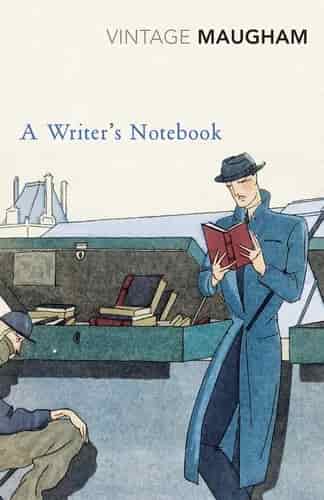
...we learn resignation not by our own suffering, but by the suffering of others.
p. 64