Quotes
tolerance should be given to all religions that tolerate others, so long as their dogmas contain nothing contrary to the duties of citizenship.
Ireland is unique in religious history for being the only land into which Christianity was introduced without bloodshed.
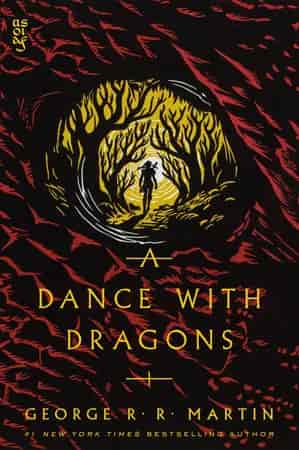
As he silently approached the last float, a latticework ball of reeds, he offered an unspoken prayer to He Who Always Steps on Sand that even now the little bottom-walkers were pushing and shoving their way into the cage below. Because of his unusual education, which included a year living on Perdruin—unheard of for a Wrannaman—Tiamak did not really believe in He Who Always Steps on Sand anymore, but he still held a fondness for him, such as might be felt for a senile grandfather who often tumbled down from the house, but once brought nuts and carved toys. Besides, it never hurt to pray, even if one did not believe in the object of prayer. It helped to compose the mind, and, at the very least, it impressed others.
p. 447
Like Christianity, Buddhism explained suffering. In forms that established themselves in China, Buddhism offered the same sort of comfort to bereaved survivors and victims of violence or of disease as Christian faith did in the Roman world. Buddhism of course originated in India, where disease incidence was probably always very high as compared with civilizations based in cooler climates; Christianity, too, took shape in the urban environments of Jerusalem, Antioch, and Alexandria where the incidence of infectious disease was certainly very high as compared to conditions in cooler and less crowded places. From their inception, therefore, both faiths had to deal with sudden death by disease as one of the conspicuous facts of human life. Consequently, it is not altogether surprising that both religions taught that death was a release from pain, and a blessed avenue of entry upon a delightful afterlife where loved ones would be reunited, and earthly injustices and pains amply compensated for.
Of course I don't want the old religious dope. But I don't want just the new science dope either. I want the truth.
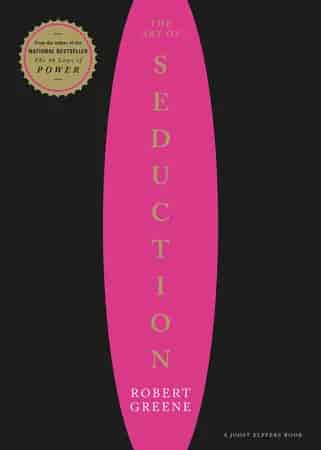
But each man who worships you sees only what he wishes to see rather than any mystery you may actually embody.
p. 113
‘Amazing Grace’ is the supreme hymn of Evangelical redemption….It is therefore tempting to imagine John Newton suddenly seeing the light about slavery and turning away from his wicked profession to dedicate himself to God. But the timing of Newton’s conversion is all wrong. In fact, it was after his religious awakening that Newton became the first mate and then the captain of a succession of slave ships, and only much later that he began to question the morality of buying and selling his fellow men and women.
p. 78
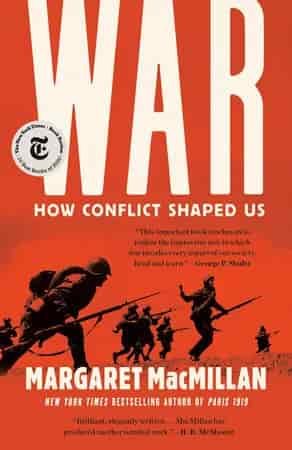
Religion, and it can merge into nationalism as orthodoxy does with the Serbs and the Russians, offers both a cause worth dying for and the promise of eternal life. The crusaders did not leave their homes all over Europe and make the long and dangerous journey to the Holy Land just to acquire loot and land. There was more and better to be had much closer to home. They were driven by what they thought was a divine mission, to retrieve the land where Christ had once lived for Christendom. Many crusaders – kings such as Richard I of England, the Lionheart, and Philip II of France and great landed magnates – left behind properties, position and families and many never returned. Egged on by religious leaders such as Pope Gregory VII, who reminded the faithful of the passage from the Book of Jeremiah ‘Cursed be he that keepeth back his sword from blood’, they killed indiscriminately those they thought of as infidels. In the massacres in Jerusalem in 1099 the streets were said to have run with blood, in some places up to the knees of the crusaders’ horses. ‘None of them were left alive; neither women nor children were spared,’ said a contemporary account.
Today of course we have religious wars again and the targets are again without limit until the final goal is achieved. Sadly even wars which are meant to be about ending war itself take on that limitless character. If the purpose is to remove for ever the scourge of war, then whatever atrocities and cruelties are committed in its name will be justified because the sacrifice is surely worth it. In the lead-up to the Thirty Years War radical Calvinists, espousing an extreme form of Protestantism, came to believe that the Habsburg monarchy was the force of darkness which must be eradicated before the righteous could be saved. When the radicals in the French Revolution prepared to wage war on Europe it was for earthly salvation. As one revolutionary said in 1791, ‘It is because I want peace that I am asking for war.’ The enemy, as in religious wars, becomes the enemy of humanity itself and must be utterly destroyed not merely defeated.
Religion humanizes this universe, makes us feel important and loved. We are not animals governed by uncontrollable drives, animals that die for no apparent reason, but creatures made in the image of supreme being.
Religion is the great balm of existence because it takes us outside ourselves, connects us to something larger.
Men do not give up their gods so easily.