Quotes about hypocrisy
245 quotes · 148 authors
Quotes
Oh, my young friend, who else could have resisted the pleading of sixteen of our fairest sisters, and withstood their exhortations to subscribe to our noble society for providing the infant negroes in the West Indies with flannel waistcoats and moral pocket-handkerchiefs?
“The trouble with you, Peter—one of the troubles—is you worry too much about other people’s behavior. And you have too high ideals for them, ideals which you yourself don’t try to live up to.”
“I know I can’t live up to them, so I make a no pretense,” Frigate said.
“But it bothers me that others claim to have these ideals and to be living up to them. If I point out that they aren’t, they get angry.”
The little Moor chuckled. “Naturally. Your criticism threatens their self-image. If that were to be destroyed, they, too, would be destroyed. At least, they think so.”
p. 297
Hypocrisy, double standards, and "but nots" are the price of universalist pretensions. Democracy is promoted, but not if it brings Islamic fundamentalists to power; nonproliferation is preached for Iran and Iraq, but not for Israel; free trade is the elixir of economic growth, but not for agriculture; human rights are an issue for China, but not with Saudi Arabia; aggression against oil-owning Kuwaitis is massively repulsed, but not against non-oil-owning Bosnians. Double standards in practice are the unavoidable price of universal standards of principle.
p. 184
Something funny I have noticed—perhaps you have noticed it, too. You know what futurists and online-ists and cut-out-the-middle-man-ists and Davos-ists and deconstructionists of every stripe want for themselves? They want exactly what they tell you you no longer need, you pathetic, overweight, disembodied Kindle reader. They want white linen tablecloths on trestle tables in the middle of vineyards on soft blowy afternoons. (You can click your bottle of wine online. Cheaper.) They want to go shopping on Saturday afternoons on the Avenue Victor Hugo; they want the pages of their New York Times all kind of greasy from croissant crumbs and butter at a café table in Aspen; they want to see their names in hard copy in the “New Establishment” issue of Vanity Fair; they want a nineteenth-century bookshop; they want to see the plays in London; they want to float down the Nile in a felucca; they want five-star bricks and mortar and Do Not Disturb signs and views of the park. And in order to reserve these things for themselves they will plug up your eyes and your ears and your mouth, and if they can figure out a way to pump episodes of The Simpsons through the darkening corridors of your brain as you expire (ADD TO SHOPPING CART), they will do it.
Conventionality is not morality. Self-righteousness is not religion. To attack the first is not to assail the last. To pluck the mask from the face of the Pharisee, is not to lift an impious hand to the Crown of Thorns. These things and deeds are diametrically opposed: they are as distinct as is vice from virtue. Men too often confound them: they should not be confounded: appearance should not be mistaken for truth; narrow human doctrines, that only tend to elate and magnify a few, should not be substituted for the world-redeeming creed of Christ. There is — I repeat it — a difference; and it is a good, and not a bad action to mark broadly and clearly the line of separation between them.The world may not like to see these ideas dissevered, for it has been accustomed to blend them; finding it convenient to make external show pass for sterling worth — to let white-washed walls vouch for clean shrines. It may hate him who dares to scrutinise and expose — to rase the gilding, and show base metal under it — to penetrate the sepulchre, and reveal charnel relics: but hate as it will, it is indebted to him.
Everywhere he found his precept checkmated by his example.
If on some occasion I happen to read something in it — because, for instance, I need to know a date — I am always disconcerted to find that two or five years ago I came to exactly the same conclusion, only to forget it because I had not succeeded in living up to it; in fact, I had tenaciously been doing the very opposite.
As a homosexual, he had been wavering between embarrassment and defiance. He became embarrassed when he felt that he was making a selfish demand for his individual rights at a time when only group action mattered. He became defiant when he made the treatment of the homosexual a test by which every political party and government must be judged. His challenge to each one of them was: "All right, we've heard your liberty speech. Does that include us or doesn't it?"
The Soviet Union had passed this test with honors when it recognized the private sexual rights of the individual, in 1917. But, in 1934, Stalin's government had withdrawn this recognition and made all homosexual acts punishable by heavy prison sentences. It had agreed with the Nazis in denouncing homosexuality as a form of treason to the state. The only difference was that the Nazis called it "sexual Bolshevism" and the Communists "Fascist perversion."
Christopher — like many of his friends, homosexual and heterosexual — had done his best to minimize the Soviet betrayal of its own principles. After all, he had said to himself, anti-homosexual laws exist in most capitalist countries, including England and the United States. Yes — but if Communists claim that their system is juster than capitalism, doesn't that make their injustice to homosexuals less excusable and their hypocrisy even viler? He now realized that he must dissociate himself from the Communists, even as a fellow traveler. He might, in certain situations, accept them as allies but he could never regard them as comrades. He must never again give way to embarrassment, never deny the rights of his tribe, never apologize for its existence, never think of sacrificing himself masochistically on the altar of that false god of the totalitarians, the Greatest Good of the Greatest Number — whose priests are alone empowered to decide what "good" is.
p. 334
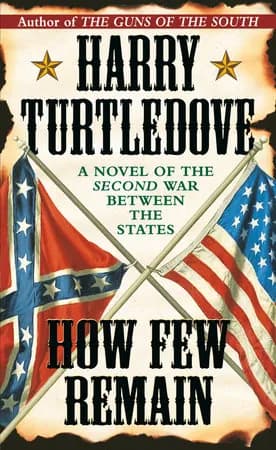
Of course, the Confederacy was also a Christian country…and what did that say about Christianity? Nothing good, she was sure.
p. 270
Anyone who forces something on someone and then says he will be better for it—you will, I hope, understand me when I say this is difficult to appreciate.
p. 355
“Oh, they are great ones for taking a high moral tone, the Confederate States,” Douglass said. “Taking a high moral tone costs them nothing. Living up to it is something else again.”
p. 329
When a politician, which was what the president of the CSA had long since become, said he was personally in sympathy with something, Jackson had learned, he meant the opposite.
p. 35