Quotes about ecology
222 quotes · 87 authors
Quotes
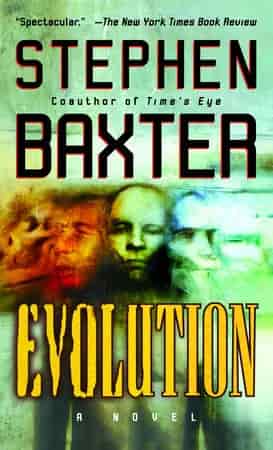
They saw the end coming, he thought, looking down the file of awful figures. But they were dead wrong about the reasons why. They assumed only gods had the power to wreak such havoc on their world, but people caused the devastation here.
Alex felt compassion for the ancient Pasquans—but a superior sort nevertheless. In blaming gods, they had conveniently diverted censure from the real culprit. The designer of weapons. The feller of trees. The destroyer. Man himself.
p. 366
We can’t save the world without food. Only people with full stomachs become environmentalists.
p. 72
If we're ever going to get the world back on a natural footing, back in tune with natural rhythyms, if we're going to nurture the Earth and protect it and have fun with it and learn from it — which is what mothers do with their children — then we've got to put technology (an aggressive masculine system) in its proper place, which is that of a tool to be used sparingly, joyfully, gently and only in the fullest cooperation with nature. Nature must govern technology, not the other way around.
p. 211
"...We believe we can continue to live and thrive only if we care for one another. This is the age of the Reaper, when we inherit five thousand years of postponed results, the fruits of our callousness toward the earth and toward other human beings. But at last we have come to understand that we are part of the earth, part of the air, the fire, and the water, as we are part of one another.” (p17)
Imagine the terrestrial timespan as an outstretched arm: a single swipe of an emery=board, across the nail of the third finger, erases human history. We haven't been around for very long. And we've turned the earth's hair white. She seemed to have eternal youth but now she's ageing awful fast, like an addict, like a waxless candle. Jesus, have you seen her recently? We used to live and die without any sense of the planet getting older, of mother earth getting older, living and dying. We used to live outside history. But now we're all coterminous. We're inside history now all right, on its leading edge, with the wind ripping past our ears. Hard to love, when you're bracing yourself for impact. And maybe love can't bear it either, and flees all planets when they reach this condition, when they get to the end of their twentieth centuries.
The purpose of keeping any collection of wild animals in confinement should be threefold; first, to conduct as complete as possible a biological study of every species, especially those aspects which are too difficult or too costly to study in the wild and which may help in the preservation of that species in its natural habitat; second, to aid severely endangered species by setting up, under ideal conditions, protected breeding groups and, eventually, a reintroduction programme, so helping to ensure their future survival; thirdly, by the display and explanation of this work to the public, to persuade people of the vital necessity and urgency for the overall conservation of nature.
There would be a dreadful outcry if anyone suggested obliterating, say, the Tower of London, and quite rightly so; yet a unique and wonderful species of animal which has taken hundreds of thousands of years to develop to the stage we see today, can be snuffed out like a candle without more than a handful of people raising a finger or a voice in protest. So, until we consider animal life to be worthy of the consideration and reverence we bestow upon old books and pictures and historic monuments, there will always be the animal refugee living a precarious life on the edge of extermination, dependent for existence on the charity of a few human beings.
Firstly what does conservation mean? It is not merely the saving from extinction of such species as the Notornis, the Leadbetters Possum or the Leathery Turtle; this is important work but it is only part of the problem. You cannot begin to preserve any species of animal unless you preserve the habitat in which it dwells. Disturb or destroy that habitat and you will exterminate the species as surely as if you had shot it. So conservation means that you have to preserve forest and grassland, river and lake, even the sea itself. This is not only vital for the preservation of animal life generally, but for the future existence of man himself — a point that seems to escape many people.
We have inherited an incredibly beautiful and complex garden, but the trouble is that we have been appallingly bad gardeners. We have not bothered to acquaint ourselves with the simplest principles of gardening. By neglecting our garden, we are storing up for ourselves, in the not very distant future, a world catastrophe as bad as any atomic war, and we are doing it with all the bland complacency of an idiot child chopping up a Rembrandt with a pair of scissors. We go on, year after year, all over the world, creating dust bowls and erosion, cutting down forests and overgrazing our grasslands, polluting one of our most vital commodities — water — with industrial filth and all the time we are breeding with the ferocity of the Brown Rat, and wondering why there is not enough food to go round. We now stand so aloof from nature that we think we are God. This has always been a dangerous supposition.
Nothing mankind had done in its short and bloody history had made the slightest bit of difference to this patient geographical realignment.
Meanwhile the Earth, left to its own devices, had deployed a variety of healing mechanisms, physical, chemical, biological, and geological, to recover from the devastating interventions of its human inhabitants. Air pollutants had been broken up by sunlight and dispersed. Bog ore had absorbed much metallic waste. Vegetation had recolonized abandoned landscapes, roots breaking up concrete and asphalt, overgrowing ditches and canals. Erosion by wind and water had caused the final collapse of the last structures, washing it all into sand.
Meanwhile the relentless processes of variation and selection had worked to fill an empty world.
p. 579
The fault is all ours. We have become overwhelming. About one in twenty of all the people who have ever existed is alive today, compared to just one in a thousand of other species. As a result we are depleting the earth.
But even now the question is still asked: Does it really matter? So we lose a few cute mammals, and a lot of bugs nobody ever heard of. So what? We’re still here.
Yes, we are. But the ecosystem is like a vast life-support machine. It is built on the interaction of species on all scales of life, from the humblest fungi filaments that sustain the roots of plants to the tremendous global cycles of water, oxygen, and carbon dioxide. Darwin’s entangled bank, indeed. How does the machine stay stable? We don’t know. Which are its most important components? We don’t know. How much of it can we take out safely? We don’t know that either. Even if we could identify and save the species that are critical for our survival, we wouldn’t know which species they depend on in turn. But if we keep on our present course, we will soon find out the limits of robustness.
I may be biased, but I believe it will matter a great deal if we were to die by our own foolishness. Because we bring to the world something that no other creature in all its long history has had, and that is conscious purpose. We can think our way out of this.
So my question is—consciously, purposefully, what are we going to do?
p. 509
As the natural systems of the planet broke down, humans would discover conclusively that they were still, after all, just animals in an ecosystem; and as it died back, so did they.
p. 525