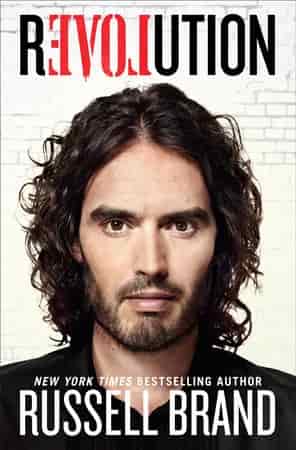
It’s six months since I did the interview with Jeremy Paxman that inspired this book, and British media today… — Russell Brand
It’s six months since I did the interview with Jeremy Paxman that inspired this book, and British media today is awash with halfhearted condemnations of my observation that voting is pointless and my admission that I have never voted. My assertion that other people oughtn’t vote either was born of the same instinctive rejection of the mantle of appointed social prefect that prevents me from telling teenagers to "Just Say No" to drugs. I cannot confine my patronage to the circuitry of their minuscule wisdom. "People died so you’d have the right to vote." No, they did not; they died for freedom. In the case where freedom was explicitly attached to the symbol of democratic rights, like female suffrage, I don’t imagine they’d’ve been so willing if they’d known how tokenistic voting was to become. Note too these martyrs did not achieve their ends by participating in a hollow, predefined ritual, the infertile dry hump of gestural democracy; they did it by direct action. Emily Davison, the hero of women’s suffrage, hurled herself in front of the king’s horses; she defied the tyranny that oppressed her and broke the boundaries that contained her. I imagine too that this woman would have had the rebellious perspicacity to understand that the system she was opposing would adjust to incorporate the female vote and deftly render it irrelevant. This woman, who left her job as a teacher to dedicate her life to activism, was imprisoned nine times. She used methods as severe and diverse as arson and hunger-striking to protest and at the time of her death would have been regarded as a terrorist.
Source: Wikiquote · CC BY-SA 4.0
More from this book
Or as Flight of the Conchords put it: "They’re turning kids into slaves just to make cheaper sneakers. But what’s the real cost? ’Cause the sneakers don’t seem that much cheaper. Why are we still paying so much for sneakers when you got them made by little slave kids? What are your overheads?"
When the physicist speaks of the expanding universe with atheistic wonder, he is feeling the same transcendent pull that Rumi describes: Do you know what you are? You are a manuscript of a divine letter. You are a mirror reflecting a noble face. This universe is not outside of you. Look inside yourself; everything that you want, you are already that.
If I, so close to the peak, could glean no joy from that rarefied air, the air I was told, as soon as I’d acquired language, would absolve me, if in fact all I gleaned was the view from that peak, the vista true, that the whole climb had been a spellbound clamber up an edifice of foolishness, then what possible salvation can there be for those at the foothills or dying on the slopes or those for whom the climb is not even an option? What is their solution? Well, it’s the same solution that’s available to me, the only solution that will make any of us free. To detach the harness and fall within. Now that’s what I call an extended metaphor. In Fairfield, Iowa, then, there could be the solution. But none of us want a boring solution. The Revolution cannot be boring.