Leafy Quotes
Recently added
The newest book quotes in the Leafy Quotes collection — passages readers have just added, each with its author, book and the page it came from.
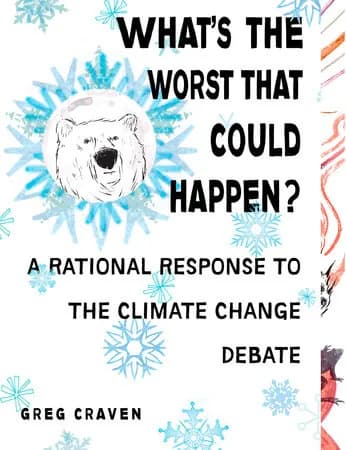
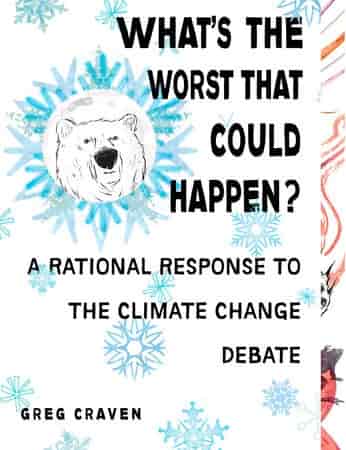
New breakthrough technologies can make it easier, but we've already got, right now, everything we need to accomplish the task of transforming our energy economy away from fossil fuels. Except the willingness.
p. 218
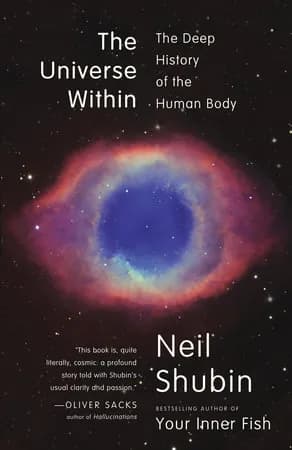
The order of fossils in the world’s rocks is powerful evidence of our connections to the rest of life.
p. 8
The thrill of the scientific hunt is to have an idea whose truth is hitched to predictions that take us to new places to explore, objects to discover, and data to analyze.
p. 132
Try to keep in mind one of the fundamental aspects of science: letting the evidence form belief rather than belief select evidence.
p. 206
For thousands of years, mankind considered itself the pinnacle of life’s creation on a planet sitting in the center of the universe. Science changed that perception. Leavitt, Hubble, and others helped us see that we live near the margin of a vast galaxy, in a universe of galaxies, with our planet one of many worlds. Darwin and the biologists had their say too. Our entire species is but one little twig on an enormous tree of life filled with all life on earth. But each discovery that moves us from the center of creation to some obscure corner brings an entirely new relation between us, other species, and the entire universe.
p. 24
Humans are a timekeeping species, and much of our history can be traced to the ways we parse the moments of our lives.
p. 60
Do the facts of our ancient history mean that humans are not special or unique among living creatures? Of course not. In fact, knowing something about the deep origins of humanity only adds to the remarkable fact of our existence: all of our extraordinary capabilities arose from basic components that evolved in ancient fish and other creatures. From common parts came a very unique construction. We are not separate from the rest of the living world; we are part of it down to our bones and, as we will see shortly, even our genes.
p. 43
Just as Darwin’s theory predicted: at the right time, at the right place, we had found intermediates between two apparently different kinds of animals.
p. 39
The clever part is that it changes the question from, Who should I believe? to, What should I do? After all, the physical world is unaffected by our beliefs. It reacts only to our actions.
p. 19
Scientists are trained to not give absolute answers. It is interesting that in recent years, some have started to do so when talking with the media, because they've learned that whenever they include the very scientific words possibly, perhaps, and uncertainty, their conclusions are interpreted by the media and public as simple guesswork.
p. 41
As humans, we reflexively reject arguments that contradict what we would like to be true.
p. 74
As much as we think science is about being right, the actual practice of the stuff is largely focused on being wrong.
Why? Because being open to the possibility that you might be wrong is exactly how you get less wrong over time, sort of like saying “I’d better find all the holes in my argument before someone else can." Strangely, the way to make your ideas stronger is to try to break them. Looking for errors in your understanding rather than just trying to find supporting evidence is the best way to improve your ideas.
p. 47