Leafy Quotes
Recently added
The newest book quotes in the Leafy Quotes collection — passages readers have just added, each with its author, book and the page it came from.
Only man is wrong; to him alone is reserved what is denied to everything else-to be in the wrong in relation to God.
p. 344
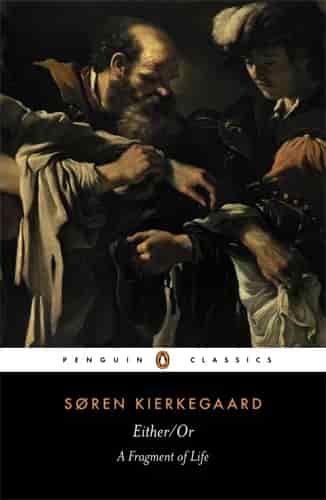
Do not interrupt the flight of your soul; do not distress what is best in you; do not enfeeble your spirit with half wishes and half thoughts. Ask yourself and keep on asking until you find the answer, for one may have known something many times, acknowledged it; one may have willed something many times, attempted it — and yet, only the deep inner motion, only the heart's indescribable emotion, only that will convince you that what you have acknowledged belongs to you, that no power can take it from you — for only the truth that builds up is truth for you.
p. 354
The greatest danger, that of losing one's own self, may pass off as quietly as if it were nothing; every other loss, that of an arm, a leg, five dollars, a wife etc., is sure to be noticed.
As if pity is, as he has been taught, not a helpless outcry but a powerful tide that could redeem the world...
The only way to get somewhere, you know, is to figure out where you're going before you go there.
Someone will read as moral
That the people of Rome or Warsaw
Haggle, laugh, make love
As they pass by martyrs' pyres.
Someone else will read
Of the passing of things human,
Of the oblivion
Born before the flames have died. But that day I thought only
Of the loneliness of the dying,
Of how, when Giordano
Climbed to his burning
There were no words
In any human tongue
To be left for mankind,
Mankind who live on.
He had gone to church and brought back this little flame and had nowhere to put it on the dark damp walls of the apartment, so it had flickered and gone out. And he realised that he wouldn't always be able to produce this flame.
The difficulty with humorists is that they will mix what they believe with what they don't; whichever seems likelier to win an effect.
Someone in despair despairs over something. So, for a moment, it seems, but only for a moment. That same instant the true despair shows itself, or despair in its true guise. In despairing over something he was really despairing over himself, and he wants now to be rid of himself.
p. 49
It is beautiful and healthy if a person has been unfortunate in his first love, has learned to know the pain of it but nevertheless remains faithful to his love, has kept his faith in this first love; it is beautiful if in the course of the years he at times very vividly recalls it, and even though his soul has been sufficiently healthy to bid farewell, as it were, to that kind of life in order to dedicate himself to something higher; it is beautiful if he then sadly remember it as something that was admittedly not perfect but yet was so very beautiful. And then sadness is far more beautiful and healthy and noble than the prosaic common sense that has long since finished with all such childishness, this devilish prudence of choir director Basil that fancies itself to be healthy but which is the most penetratingly wasting illness; for what does it profit a man if he gained the whole world but lost his soul? For me the phrase “the first love” has no sadness at all, or at least only a little admixture of sweet sadness; for me it is a password, and although I have been a married man for several years, I have the honor fight to under the victorious banner of the first love.
p. 37
Sometimes when you have scrutinized a face long and persistently, you seem to discover a second face hidden behind the one you see. This is generally an unmistakable sign that this soul harbors an emigrant who has withdrawn from the world in order to watch over secret treasure, and the path for the investigator is indicated by the fact that one face lies beneath the other, as it were, from which he understands that he must attempt to penetrate within if he wishes to discover anything. The face, which ordinarily is the mirror of the soul, here takes on, though it be bur for an instant, an ambiguity that resists artistic production. An exceptional eye is needed to see it, and trained powers of observation to follow this infallible index of a secret grief. This eye is eager, and yet to solicitous; anxious and compelling, and yet so sympathetic; persistent and shrewd, and yet sincere and benevolent. It lulls the individual into a certain pleasant languor, in which he finds an almost voluptuous pleasure in pouring forth his grief, like the pleasure said to accompany blood-letting. The present is forgotten, the external is broken through, the past is resurrected, grief breathes easily. The sorrowing soul finds relief, and sorrow’s sympathetic knight errant rejoices that he has found the object of his search; for we seek not the present, but sorrow whose nature is to pass by. In the present it manifests itself only for a fleeting instant, like the glimpse one may have of a man turning a corner and vanishing from sight.
p. 173
To forget — this is the desire of all people, and when they encounter something unpleasant, they always say: If only I could forget! But to forget is an art that must be practiced in advance. To be able to forget always depends upon how one experiences actuality.
p. 293