Leafy Quotes
Recently added
The newest book quotes in the Leafy Quotes collection — passages readers have just added, each with its author, book and the page it came from.
Women don't suffer from penis envy. Men do.
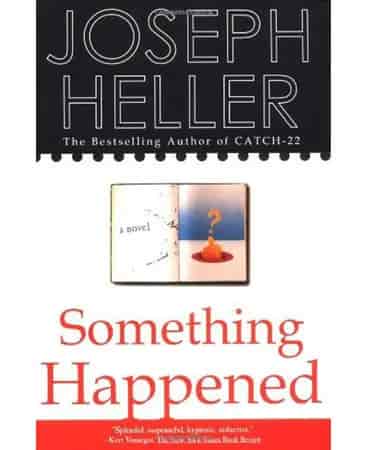
Something did happen to me somewhere that robbed me of confidence and courage and left me with a fear of discovery and change and a positive dread of everything unknown that may occur.
It's a real problem to decide whether it's more boring to do something boring than to pass along everything boring that comes in to somebody else and then have nothing to do at all.
Yesterday, I helped a blind man across the street and was surprised that I did not feel revolted when I took his arm.
The years are too short, the days are too long.
“Neither force, nor argument, nor opinion," said Merlyn with the deepest sincerity, "are thinking. Argument is only a display of mental force, a sort of fencing with points in order to gain a victory, not for truth. Opinions are the blind alleys of lazy or of stupid men, who are unable to think. If ever a true politician really thinks a subject out dispassionately, even Homo stultus will be compelled to accept his findings in the end. Opinion can never stand beside truth. At present, however, Homo impoliticus is content either to argue with opinions or to fight with his fists, instead of waiting for the truth in his head. It will take a million years, before the mass of men can be called political animals.”
It was a basic Confucian principle that "it is man who makes truth great, not truth which makes man great." For this reason, "humanness" or "human-heartedness" (jen) was always felt to be superior to "righteousness" (i), since man himself is greater than any idea which he may invent. There are times when men's passions are much more trustworthy than their principles.
p. 29
"We find that at present the human race is divided into one wise man, nine knaves, and ninety fools out of every hundred. That is, by an optimistic observer. The nine knaves assemble themselves under the banner of the most knavish among them, and become 'politicians'; the wise man stands out, because he knows himself to be hopelessly outnumbered, and devotes himself to poetry, mathematics, or philosophy; while the ninety fools plod off under the banners of the nine villains, according to fancy, into the labyrinths of chicanery, malice and warfare. It is pleasant to have command, observes Sancho Panza, even over a flock of sheep, and that is why the politicians raise their banners. It is, moreover, the same thing for the sheep whatever the banner. If it is democracy, then the nine knaves will become members of parliament; if fascism, they will become party leaders; if communism, commissars. Nothing will be different, except the name. The fools will be still fools, the knaves still leaders, the results still exploitation. As for the wise man, his lot will be much the same under any ideology. Under democracy he will be encouraged to starve to death in a garret, under fascism he will be put in a concentration camp, under communism he will be liquidated.”
“He caught a glimpse of that extraordinary faculty in man, that strange, altruistic, rare, and obstinate decency which will make writers or scientists maintain their truths at the risk of death. Eppur si muove, Galileo was to say; it moves all the same. They were to be in a position to burn him if he would go on with it, with his preposterous nonsense about the earth moving round the sun, but he was to continue with the sublime assertion because there was something which he valued more than himself. The Truth. To recognize and to acknowledge What Is. That was the thing which man could do, which his English could do, his beloved, his sleeping, his now defenceless English. They might be stupid, ferocious, unpolitical, almost hopeless. But here and there, oh so seldome, oh so rare, oh so glorious, there were those all the same who would face the rack, the executioner, and even utter extinction, in the cause of something greater than themselves. Truth, that strange thing, the jest of Pilate's. Many stupid young men had thought they were dying for it, and many would continue to die for it, perhaps for a thousand years. They did not have to be right about their truth, as Galileo was to be. It was enough that they, the few and martyred, should establish a greatness, a thing above the sum of all they ignorantly had.”
"Yes, that is the equality of man. Slaughter anybody who is better than you are, and then we shall be equal soon enough. All equally dead".
If Christianity is wine and Islam coffee, Buddhism is most certainly tea.
p. 190
“To be free from convention is not to spurn it but not to be deceived by it. It is to be able to use it as an instrument instead of being used by it.”
p. 11