Leafy Quotes
Recently added
The newest book quotes in the Leafy Quotes collection — passages readers have just added, each with its author, book and the page it came from.
There are people who exist in this world not like entities but like the speckles or spots on something.
Live a balanced life — learn some and think some and draw and paint and sing and dance and play and work every day some.
It’s hard to explain the cost and consequences of environmental pollution and destruction to a six year old. But we are paying a desperate price even now because adults did not heed the instructions of kindergarten: Clean up your own mess; put things back where you found them; don’t take what’s not yours.
Be aware of wonder. And then remember the Dick and Jane books and the first word you learned — the biggest word of all — LOOK.
A six-year-old will not understand that “By and large it has been demonstrated that violence is counterproductive to the constructive interaction of persons and societies.” True. But a child can better understand that the rule out in the world and in the school is the same: Don’t hit people. Bad things happen. The child must understand this rule is connected to the first rule: People won’t share or play fair if you hit them.
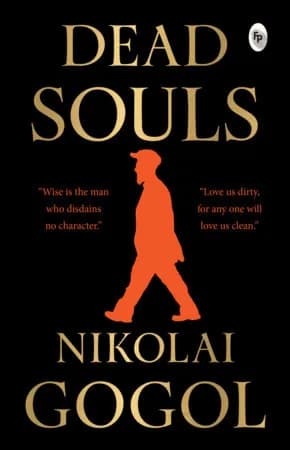
As it is so strangely ordained in this world, what is amusing will turn into being gloomy, if you stand too long before it, and then God knows what ideas may not stray into the mind... Why is it that even in moments of unthinking, careless gaiety a different and strange mood comes upon one?
Russia! Russia! I see you now, from my wondrous, beautiful past I behold you! How wretched, dispersed, and uncomfortable everything is about you...
They insist that an author should write in the strictest, purest and noblest language: in short, they expect the Russian language to drop from the clouds, already refined, and that it should come naturally to the lips, so that all they have to do is to open their mouth and stick out their tongue. It goes without saying, of course, that the feminine half of the human species is very wise; but it must be confessed that our respected readers are even wiser.
Life-and-death. Lifedeath. One event. One short event. Don’t forget.
[Women's] boarding schools, as we know, hold the three principal subjects which constitute the basis of human virtue to be the French language (a thing indispensable to the happiness of married life), piano-playing (a thing wherewith to beguile a husband’s leisure moments), and that particular department of housewifery which is comprised in the knitting of purses and other “surprises.” Nevertheless changes and improvements have begun to take place, since things now are governed more by the personal inclinations and idiosyncracies of the keepers of such establishments. For instance, in some seminaries the regimen places piano-playing first, and the French language second, and then the above department of housewifery; while in other seminaries the knitting of “surprises” heads the list, and then the French language, and then the playing of pianos—so diverse are the systems in force!
From the first day we are told in words we can handle what has come to be prized as the foundation of community and culture. Though the teacher may call these first lessons “simple rules,” they are in fact the distillation of all the hard-won, field-tested working standards of the human enterprise.
Too often we underestimate the power of a touch, a smile, a kind word, a listening ear, an honest compliment, or the smallest act of caring, all of which have the potential to turn a life around.