Workers were encouraged to overcome a trades union mentality – Ley’s Germany Labor Front (DAF) rapidly ceased… — Michael Burleigh
Workers were encouraged to overcome a trades union mentality – Ley’s Germany Labor Front (DAF) rapidly ceased to describe itself as such – and to think in terms of a ‘socialism’ transcending mere bread and butter issues. In a departure from labourist economism, the Nazis recognized the workers’ need for respect, and the pride they took at their work, their skill, their tools, and the products of their labour, attitudes already evident in the modern technological sectors, such as aircraft or optical manufacturing. This lends plausibility to the idea that they were embarked on a revolution in consciousness, changing the way people perceived the world, rather than its material circumstances.
p. 248Source: Wikiquote · CC BY-SA 4.0
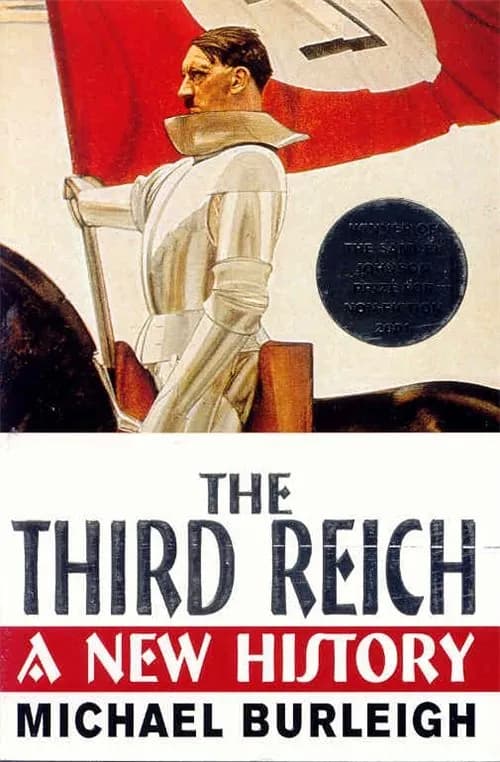
More from this book
In northern and western Germany, dynamic leaders such as Gregor Strasser and the Elberfeld journalist Joseph Goebbels wanted to concentrate on breaking into the urban socialist vote… These men espoused a Prussian socialism. Whereas Hitler had recently vented his animosity towards Russia, they regarded it ‘as the socialist nationalist state for which consciously or unconsciously the younger generation in all countries long.’
p. 103
Apparently inspired by the tidy coalmines of the Netherlands, the ‘Beauty of Labour’ section of the Labor Front tackled physical surroundings, providing improved air, light and space; decent canteens and washing facilities, and exteriors designed to make factories less forbidding. Employers with scruffy premises were warned and then stigmatized by inspectors. Each campaign was conducted under a slogan such as ‘Clean people in a clean plant’ or ‘Struggle against noise.’ Holistic talk of factory communities and of the whole man replaced over-emphasis upon the more limited question of enhancing worker productivity.
p. 249
The Social Democrats were adamant that they did not want ‘a deformed socialism that creates a mass prison’: ‘we want to liberate, not oppress.’ The Stalinised Communists, since 1929 committed to their ‘social fascists’ line, were convinced that the ‘Nazis and Social Democrats stand on the foundation of capitalist private property and were slaves of capital and enemies of the workers… According to the Stalinist view that the most insidious enemy were immediately to the left – which had Stalin’s ( NKVD) imposing discipline on Trotskyites with a bullet to the head – leftist Social Democrats were the most dangerous of the ‘social fascists.’
p. 136