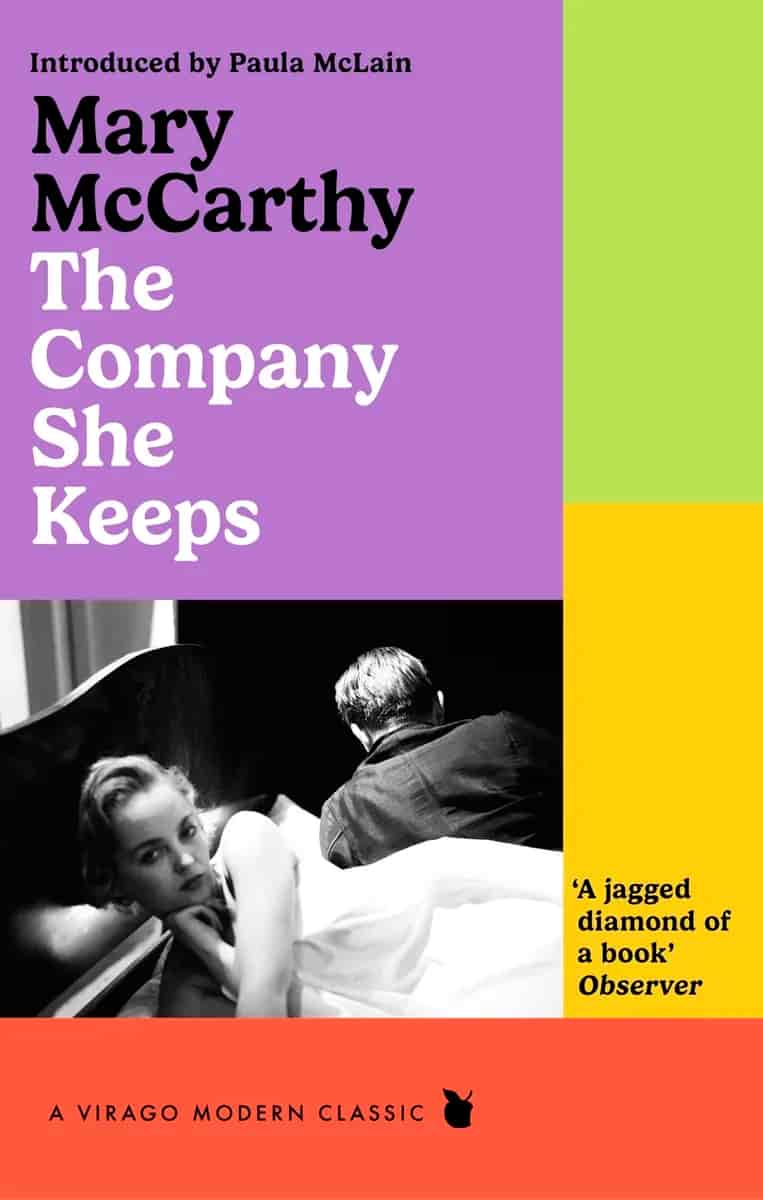
When we pass from "I ought to do this" to "You think I ought to do this," it seems to us at first that we… — Mary McCarthy
When we pass from "I ought to do this" to "You think I ought to do this," it seems to us at first that we have weakened the imperative; actually, by externalizing it, we have made it unanswerable, for it is only ourselves that we can come to terms with.
p. 147Source: Wikiquote · CC BY-SA 4.0

More from this book
I still know when I lie, I can recognize a frame-up when I make one. But Frederick is his own stooge, his own innocent front. He has a vested interest in himself. He is the perfect Protestant pragmatist. 'If I say this, it is true,' 'If I do this, it is justified.' There is no possibility of dispute because Frederick has grace, Frederick belongs to the Elect. It's the religion of the Pharisee, the religion of the businessman.
p. 186
[H]e was now confronted with what he imagined to be a general, undiscriminating hostility, a spirit of criticism embodied in the girl that was capricious, feminine, and absolutely inscrutable, so that he went about feeling continually guilty without knowing just what it was he had done. It haunted him that if he could anticipate every objection, he would be safe, but there was no telling what this strange girl might find fault with, and the very limitation of his knowledge of her made the number of possible objections limitless.
p. 148
If only one could … But it required strength. The romantic life had been too hard for her. In morals as in politics anarchy is not for the weak. The small state, racked by internal dissension, invites the foreign conqueror. Proscription, martial law, the billeting of the rude troops, the tax collector, the unjust judge, anything, anything at all, is sweeter than responsibility. The dictator is also the scapegoat; in assuming absolute authority, he assumes absolute guilt; and the oppressed masses, groaning under the yoke, know themselves to be innocent as lambs, while they pray hypocritically for deliverance.
p. 184