It is his extremity that I seem to have lived through. True, he had made that last stride, he had stepped… — Joseph Conrad
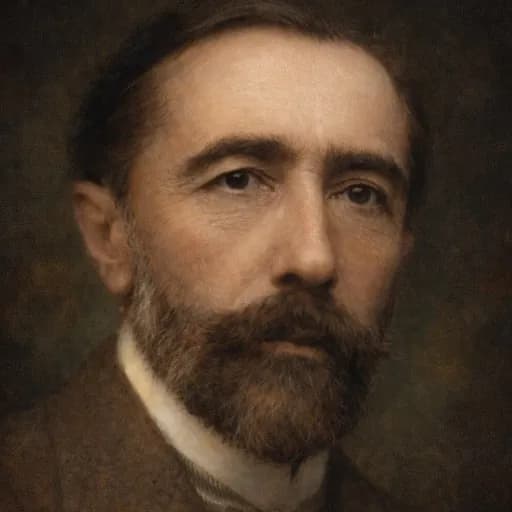
It is his extremity that I seem to have lived through. True, he had made that last stride, he had stepped over the edge, while I had been permitted to draw back my hesitating foot. And perhaps in this is the whole difference; perhaps all the wisdom, and all truth, and all sincerity, are just compressed into that inappreciable moment of time in which we step over the threshold of the invisible. Perhaps! I like to think my summing-up would not have been a word of careless contempt. Better his cry — much better. It was an affirmation, a moral victory paid for by innumerable defeats, by abominable terrors, by abominable satisfactions. But it was a victory!
Source: Wikiquote · CC BY-SA 4.0
More from this book
I found myself back in the sepulchral city resenting the sight of people hurrying through the streets to filch a little money from each other, to devour their infamous cookery, to gulp their unwholesome beer, to dream their insignificant and silly dreams. They trespassed upon my thoughts. They were intruders whose knowledge of life was to me an irritating pretence, because I felt so sure they could not possibly know the things I knew. Their bearing, which was simply the bearing of commonplace individuals going about their business in the assurance of perfect safety, was offensive to me like the outrageous flauntings of folly in the face of a danger it is unable to comprehend. I had no particular desire to enlighten them, but I had some difficulty in restraining myself from laughing in their faces so full of stupid importance.
No fear can stand up to hunger, no patience can wear it out, disgust simply does not exist where hunger is; and as to superstition, beliefs, and what you may call principles, they are less than chaff in a breeze.
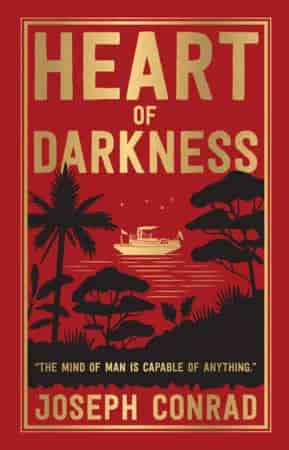
The earth seemed unearthly. We are accustomed to look upon the shackled form of a conquered monster, but there — there you could look at a thing monstrous and free. It was unearthly, and the men were, — No, they were not inhuman. Well, you know, that was the worst of it — this suspicion of their not being inhuman. It would come slowly to one. They howled, and leaped, and spun, and made horrid faces; but what thrilled you was just the thought of their humanity — like yours — the thought of your remote kinship with this wild and passionate uproar. Ugly. Yes, it was ugly enough; but if you were man enough you would admit to yourself that there was in you just the faintest trace of a response to the terrible frankness of that noise, a dim suspicion of there being a meaning in it which you — you so remote from the night of first ages — could comprehend. And why not? The mind of man is capable of anything — because everything is in it, all the past as well as all the future. What was there after all? Joy, fear, sorrow, devotion, valour, rage — who can tell? — but truth — truth stripped of its cloak of time. Let the fool gape and shudder — the man knows, and can look on without a wink. But he must at least be as much of a man as these on the shore. He must meet that truth with his own true stuff — with his own inborn strength. Principles? Principles won't do. Acquisitions, clothes, pretty rags — rags that would fly off at the first good shake. No; you want a deliberate belief.