
It's hard to convey just how poor ordinary Russians are, but I got a flavour of that in 2007 when I made a… — John Sweeney
It's hard to convey just how poor ordinary Russians are, but I got a flavour of that in 2007 when I made a BBC TV documentary, Vodka's My Poison. They called it the yellow death. It started in the summer when dozens of people turned up in casualty, a vile shade of yellow. The dozens turned to hundreds, then thousands. The better cases recovered, but will die long before their time. The worst cases? Natasha was not yet thirty, she had a seven-year-old boy called Maxim and she had less than a year to live. Her whole body had gone yellow, an instantly recognisable feature of toxic hepatitis. Something had destroyed her liver and now all the natural toxins in the body were stacking up. Her own body was poisoning her and there was nothing medicine – or at least nothing state medicine in Russia – could do about it. How come? Putin put up the price of vodka threefold in one strike. Craving alcohol, Natasha and her friends had added a new brand of handwash to their moonshine. The handwash was cheap and highly alcoholic, but also lethal. I remember the gloom in the hospital basement, steel doors slamming shut, dark yellow wraiths living out their last weeks, the lack of medicine, of care, of money, of light, of hope. It made me angry; it still does; and what I felt would be a fraction of the rage that consumed someone like Navalny who had a clear grasp of where the extraordinary riches of the Russian state were being siphoned off.
p. 144Source: Wikiquote · CC BY-SA 4.0
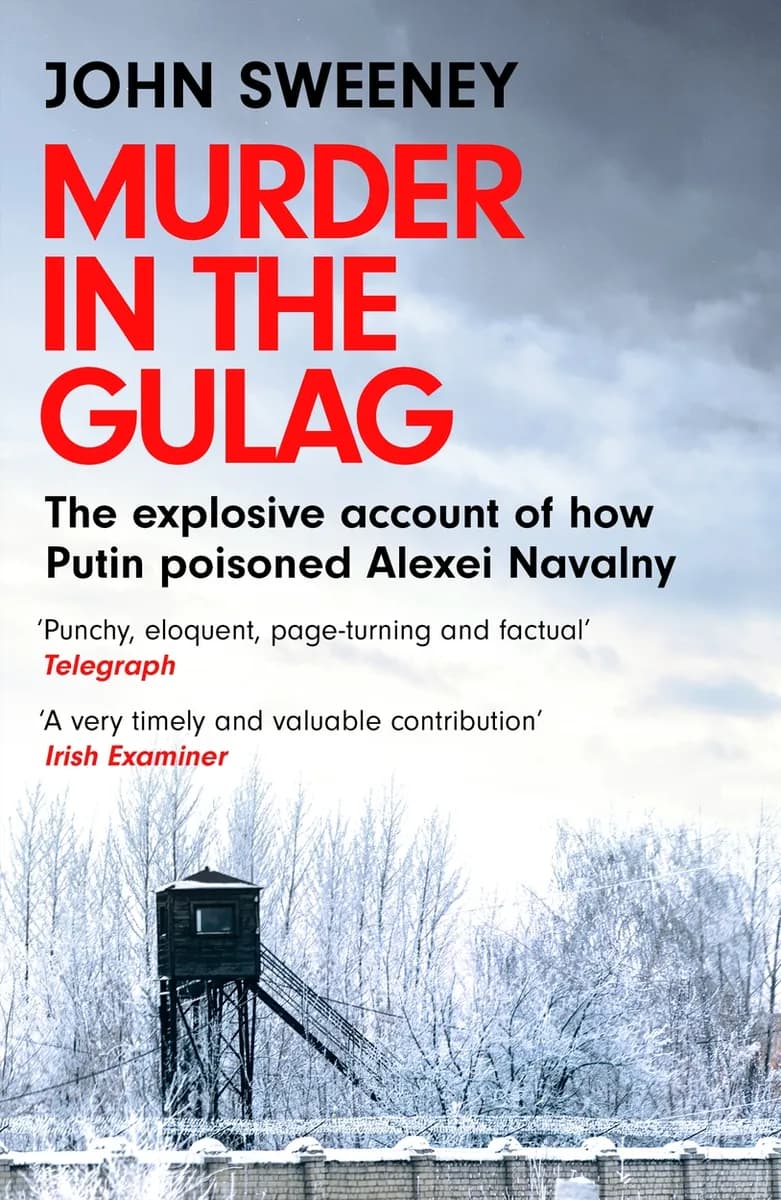
More from this book
His first downfall came in late 2004 when Putin sacked him. Kasyanov was considered to have been a good prime minister, but in the late nineties he was first nicknamed 'Misha Two Per Cent', a reference to the two per cent stake he allegedly took from government deals. Kasyanov says Putin himself brought up the nickname during their last meeting in December 2004: 'Remember that name if you ever decide to go over to the opposition', was Putin's threat. His second downfall was the sex tape during which the couple, as every political couple does the world over, slagged off their allies, Navalny included. Kasyanov carried on for a bit, a bird with a broken wing, but his career in Russian politics was dead.
That left only one man standing: Navalny.
p. 149
The whole point of Putin sending Navalny to Yamal was to break his spirit and within a month of arrival, he was cracking jokes about keeping warm in minus 32 degrees C inside the carcass of a hot, fried elephant. Once again, one is left thinking how much Putin must have hated him.
p. 267
Roughly a year before [his assassination], I had interviewed Nemtsov about Putin's grotesquely corrupt Winter Olympics in Sochi, asking him about the $5 billion road-rail link resort from the coast to the mountain ski resort. Nemtsov replied that: 'It would have been cheaper to have lined this road with Louis Vuitton handbags'. Before meeting Nemtsov, I had spent time with the comically stupid Putinist mayor of Sochi. He had knocked back my question about how gay Olympians would be treated in a city where the Kremlin's homophobic laws held sway by proclaiming: 'There are no gays in Sochi'. When I told Nemtsov about this, he laughed and laughed and laughed for so long we had to trim it down in the edit. He had a beautiful sense of the ridiculous and when I heard he had been shot, I burst into tears.
p. 146
