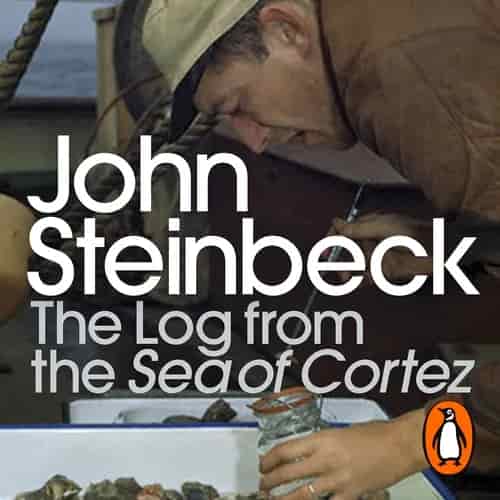
There is a strange duality in the human which makes for an ethical paradox. We have definitions of good… — John Steinbeck
There is a strange duality in the human which makes for an ethical paradox. We have definitions of good qualities and of bad; not changing things, but generally considered good and bad throughout the ages and throughout the species. Of the good, we think always of wisdom, tolerance, kindliness, generosity, humility; and the qualities of cruelty, greed, self-interest, graspingness, and rapacity are universally considered undesirable. And yet in our structure of society, the so-called and considered good qualities are invariable concomitants of failure, while the bad ones are the cornerstones of success. A man — a viewing-point man — while he will love the abstract good qualities and detest the abstract bad, will nevertheless envy and admire the person who though possessing the bad qualities has succeeded economically and socially, and will hold in contempt that person whose good qualities have caused failure. When such a viewing-point man thinks of Jesus or St. Augustine or Socrates he regards them with love because they are the symbols of the good he admires, and he hates the symbols of the bad. But actually he would rather be successful than good. In an animal other than man we would replace the term “good” with “weak survival quotient” and the term “bad” with “strong survival quotient.” Thus, man in his thinking or reverie status admires the progression toward extinction, but in the unthinking stimulus which really activates him he tends toward survival. Perhaps no other animal is so torn between alternatives. Man might be described fairly adequately, if simply, as a two-legged paradox. He has never become accustomed to the tragic miracle of consciousness. Perhaps, as has been suggested, his species is not set, has not jelled, but is still in a state of becoming, bound by his physical memories to a past of struggle and survival, limited in his futures by the uneasiness of thought and consciousness.
Source: Wikiquote · CC BY-SA 4.0
More from this book
Among primitives sometimes evil is escaped by never mentioning the name, as in Malaysia, where one never mentions a tiger by name for fear of calling him. Among others, as even among ourselves, the giving of a name establishes a familiarity which renders the thing impotent. It is interesting to see how some scientists and philosophers, who are an emotional and fearful group, are able to protect themselves against fear. In a modern scene, when the horizons stretch out and your philosopher is likely to fall off the world like a Dark Age mariner, he can save himself by establishing a taboo-box which he may call "mysticism" or "supernaturalism" or "radicalism." Into this box he can throw all those thoughts which frighten him and thus be safe from them.
"Let us go," we said, "into the Sea of Cortez, realizing that we become forever a part of it; that our rubber boots slogging through a flat of eel-grass, that the rocks we turn over in a tide pool, make us truly and permanently a factor in the ecology of the region. We shall take something away from it, but we shall leave something too." And if we seem a small factor in a huge pattern, nevertheless it is of relative importance. We take a tiny colony of soft corals from a rock in a little water world. And that isn't terribly important to the tide pool. Fifty miles away the Japanese shrimp boats are dredging with overlapping scoops, bringing up tons of shrimps, rapidly destroying the species so that it may never come back, and with the species destroying the ecological balance of the whole region. That isn't very important in the world. And thousands of miles away the great bombs are falling and the stars are not moved thereby. None of it is important or all of it is.
We are no better than the animals; in fact in a lot of ways we aren't as good.