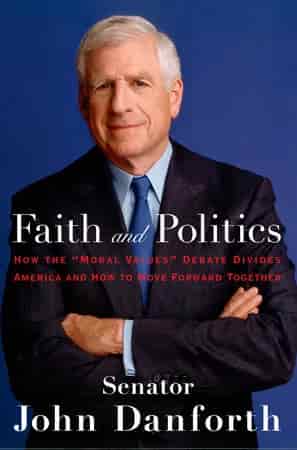
The relationship of faith and politics is not about fashioning religious beliefs into political platforms. It… — John Danforth
The relationship of faith and politics is not about fashioning religious beliefs into political platforms. It is, instead, the way in which faithful people go about the work of politics. If it were the former, family values could be reduced to legislation, but despite the efforts of Christian conservatives, that is not possible. Family values concern how a person, in my case a political person, values his family, his wife and his children. Is the family, especially the spouse, first on the list of priorities, or is it somewhere down the line?
p. 124Source: Wikiquote · CC BY-SA 4.0
More from this book
The starting point is the recognition that throughout history, religion has been a cause of bloodshed, and it remains so today. Because religion has contributed to the world's problems, it must develop specific and practical ways to help solve those problems.
p. 180
Valuing family more than job gives perspectives to politics. It puts the politician in the proper place, which is somewhere less than being the self-perceived agent of God. If family comes first, the politician needs to find ways to make that clear- by words, symbols and actions. The politician must make the effort. By its nature, the job will not do it for him.
p. 125
At least Alzheimer's patients do not know what is happening to their brains and bodies. Some say this makes Alzheimer's less terrible than ALS, where the patient understands everything. But if lack of comprehension is of some small blessing to the Alzheimer's victim, it does nothing to help the family. Care of the stricken spouse or parent can consume a family's time, energy and resources. Instead of enjoying retirement years, a husband or wife, whose own strength may be declining with age, can find every day consumed by care giving. Then there is the wrenching decision of whether to place the loved one in a nursing home, a decision that can result in enormous cost, not to mention guilt.
p. 95