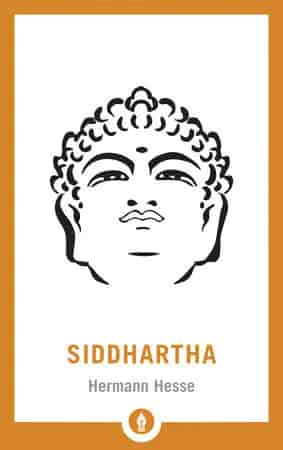
The face was unchanged, after under its surface the depth of the thousand-foldness had closed up again, he… — Hermann Hesse
The face was unchanged, after under its surface the depth of the thousand-foldness had closed up again, he smiled silently, smiled quietly and softly, perhaps very benevolently, perhaps very mockingly, precisely as he used to smile, the exalted one.
Source: Wikiquote · CC BY-SA 4.0

More from this book
Siddhartha had begun to feel the seeds of discontent within him. … He had begun to suspect that his worthy father and his other teachers, the wise Brahmins, had already passed on to him the bulk and best of their wisdom, that they had already poured the sum total of their knowledge into his waiting vessel; and the vessel was not full, his intellect was not satisfied.
p. 5
No, this tremendous amount of knowledge, collected and preserved by successive generations of wise Brahmins, could not be easily overlooked. But where were the Brahmins, the wise men, the priests who were successful in not only having this most profound knowledge, but in living it?
p. 7
They were all constantly covered by something thin, without individuality of its own, but yet existing, like a thin glass or ice, like a transparent skin, a shell or mold or mask of water, and this mask was smiling, and this mask was Siddhartha’s smiling face, which he, Govinda, in this very same moment touched with his lips. And, Govinda saw it like this, this smile of the mask, this smile of oneness above the flowing forms, this smile of simultaneousness above the thousand births and deaths