George Orwell
Quotes
There is only one way to make money at writing, and that is to marry a publisher's daughter.
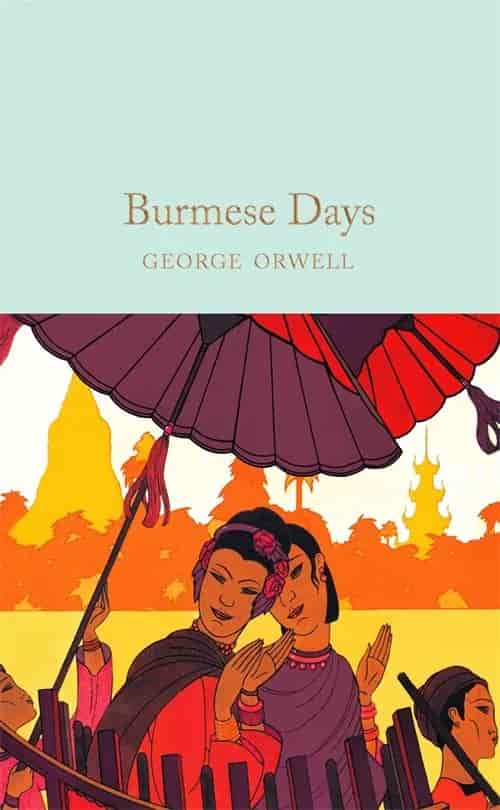
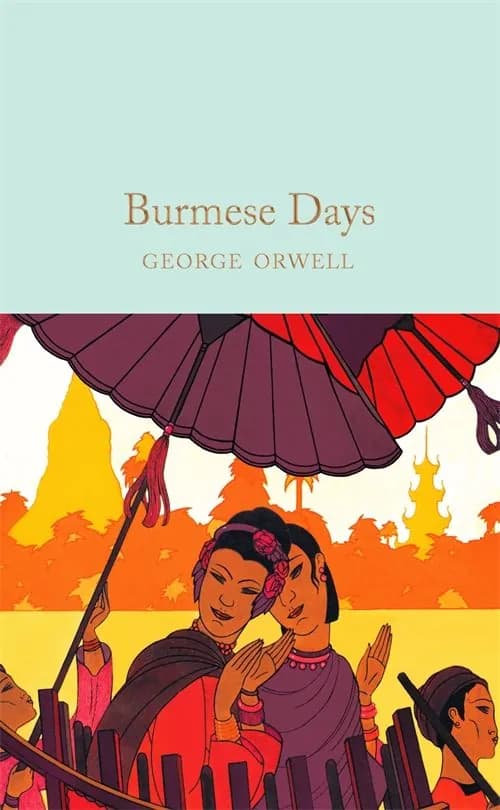
Living a lie the whole time — the lie that we're here to uplift our poor black brothers instead of to rob them ... it corrupts us, it corrupts us in ways you can't imagine.
The most bitter insult one can offer to a Londoner is "bastard" — which, taken for what it means, is hardly an insult at all.
How sweet the air does smell — even the air of a back-street in the suburbs — after the shut-in, subfaecal stench of the spike!
For, when you are approaching poverty, you make one discovery which outweighs some of the others. You discover boredom and mean complications and the beginnings of hunger, but you also discover the great redeeming feature of poverty: the fact that it annihilates the future. Within certain limits, it is actually true that the less money you have, the less you worry. When you have a hundred francs in the world you are liable to the most craven panics. When you have only three francs you are quite indifferent; for three francs will feed you till tomorrow, and you cannot think further than that. You are bored, but you are not afraid. You think vaguely, 'I shall be starving in a day or two--shocking, isn't it?' And then the mind wanders to other topics. A bread and margarine diet does, to some extent, provide its own anodyne. And there is another feeling that is a great consolation in poverty. I believe everyone who has been hard up has experienced it. It is a feeling of relief, almost of pleasure, at knowing yourself at last genuinely down and out. You have talked so often of going to the dogs--and well, here are the dogs, and you have reached them, and you can stand it. It takes off a lot of anxiety.
The whole business of swearing, especially English swearing, is mysterious. Of its very nature swearing is as irrational as magic-- indeed, it is a species of magic. But there is also a paradox about it, namely this: Our intention in swearing is to shock and wound, which we do by mentioning something that should be kept secret--usually something to do with the sexual functions. But the strange thing is that when a word is well established as a swear word, it seems to lose its original meaning; that is, it loses the thing that made it into a swear word. A word becomes an oath because it means a certain thing, and, because it has become an oath, it ceases to mean that thing.
My story ends here. It is a fairly trivial story, and I can only hope that it has been interesting in the same way as a trivial diary is interesting. ... At present I do not feel I have seen more than the fringe of poverty.
Still, I can point to one or two things I have definitely learned by being hard up. I shall never again think that all tramps are drunken scoundrels, nor expect a beggar to be grateful when I give him a penny, nor be surprised if men out of work lack energy, nor subscribe to the Salvation Army, nor pawn my clothes, nor refuse a handbill, nor enjoy a meal at a smart restaurant. That is a beginning.
Fate seemed to be playing a series of extraordinarily unamusing jokes.
Is there anything in the world more graceless, more dishonouring, than to desire a woman whom you will never have?
Being a beggar, he said, was not his fault, and he refused either to have any compunction about it or to let it trouble him. He was the enemy of society, and quite ready to take to crime if he saw a good opportunity. He refused on principle to be thrifty. In the summer he saved nothing, spending his surplus earnings on drink, as he did not care about women. If he was penniless when winter came on, then society must look after him. He was ready to extract every penny he could from charity, provided that he was not expected to say thank you for it. He avoided religious charities, however, for he said it stuck in his throat to sing hymns for buns. He had various other points of honour; for instance, it was his boast that never in his life, even when starving, had he picked up a cigarette end. He considered himself in a class above the ordinary run of beggars, who, he said, were an abject lot, without even the decency to be ungrateful.
Ellis was one of those people who constantly nag others to echo their own opinions.
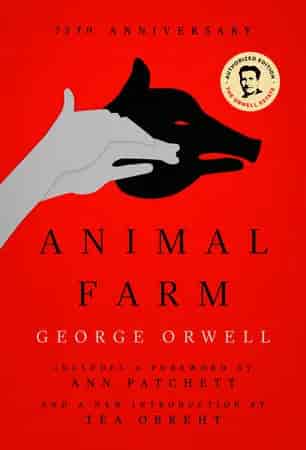
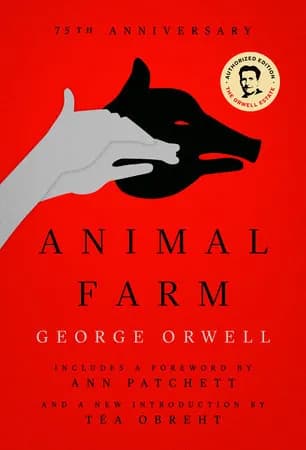
He had only one criticism, he said, to make of Mr. Pilkington's excellent and neighbourly speech. Mr. Pilkington had referred throughout to "Animal Farm." He could not of course know—for he, Napoleon, was only now for the first time announcing it—that the name "Animal Farm" had been abolished. Henceforward the farm was to be known as "The Manor Farm"—which, he believed, was its correct and original name.