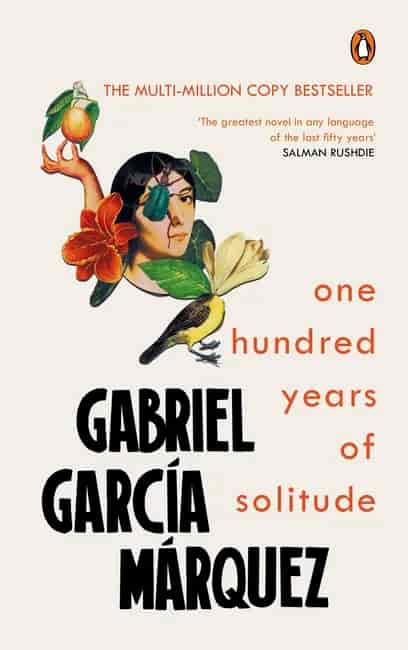
When he finished the book, in which many of the stories had no endings because there were pages missing… — Gabriel Garcia Marquez
When he finished the book, in which many of the stories had no endings because there were pages missing, Aureliano Segundo set about deciphering the manuscripts. It was impossible. The letters looked like clothes hung out to dry on a line and they looked more like musical notation than writing. One hot noontime, while he was poring over the manuscripts, he sensed that he was not alone in the room. Against the light from the window, sitting with his hands on his knees, was Melquíades. He was under forty years of age. He was wearing the same old-fashioned vest and the hat that looked like a raven's wings, and across his pale temples there flowed the grease from his hair that had been melted by the heat, just as Aureliano and José Arcadio had seen him when they were children. Aureliano Segundo recognized him at once, because that hereditary memory had been transmitted from generation to generation and had come to him through the memory of his grandfather.
Cuando terminó el libro, muchos de cuyos cuentos estaban inconclusos porque faltaban páginas, Aureliano Segundo se dio a la tarea de descifrar los manuscritos. Fue imposible. Las letras parecían ropa puesta a secar en un alambra, y se asemejaban más a la escritura musical que a la literaria. Un mediodía ardiente, mientras escrutaba los manuscritos, sintió que no estaba solo en el cuarto. Contra la reverberación de la ventana, sentado con las manos en las rodillas, estaba Melquíades. No tenía más de cuarenta años. Llevaba el mismo chaleco anacrónico y el sombrero de alas de cuervo, y por sus sienes pálidas chorreaba la grasa del cabello derretida por el calor, como lo vieron Aureliano y José Arcadio cuando eran niños. Aureliano Segundo lo reconoció de inmediato, porque aquel recuerdo hereditario se había transmitido de generación en generación, y había llegado a él desde la memoria de su abuelo.
p. 224Source: Wikiquote · CC BY-SA 4.0
More from this book
One minute of reconciliation is worth more than a whole life of friendship.
p. 337
When the pirate Sir Francis Drake attacked Riohacha in the sixteenth century, Úrsula Iguarán's great-great-grandmother became so frightened with the ringing of alarm bells and the firing of cannons that she lost control of her nerves and sat down on a lighted stove. The burns changed her into a useless wife for the rest of her days. [ . . . ] Her husband, an Aragonese merchant by whom she had two children, spent half the value of his store on medicines and pastimes in an attempt to alleviate her terror. Finally he sold the business and took the family to live far from the sea in a settlement of peaceful Indians [ . . . ] Several centuries later the great-great-grandson of the native-born planter married the great-great-granddaughter of the Aragonese. Therefore, every time that Úrsula became exercised over her husband’s mad ideas, she would leap back over three hundred years of fate and curse the day that Sir Francis Drake had attacked Riohacha.
p. 30
Aureliano gave her a look that wrapped her in an atmosphere of uncertainty.
"Somebody is coming," he told her.
Úrsula, as she did whenever he made a prediction, tried to break it down with her housewifely logic. It was normal for someone to be coming.
p. 55