

Edward George Bulwer-Lytton
Quotes
They have a proverb, the pithiness of which is much lost in this paraphrase, “No happiness without order, no order without authority, no authority without unity.” (Ch IX)
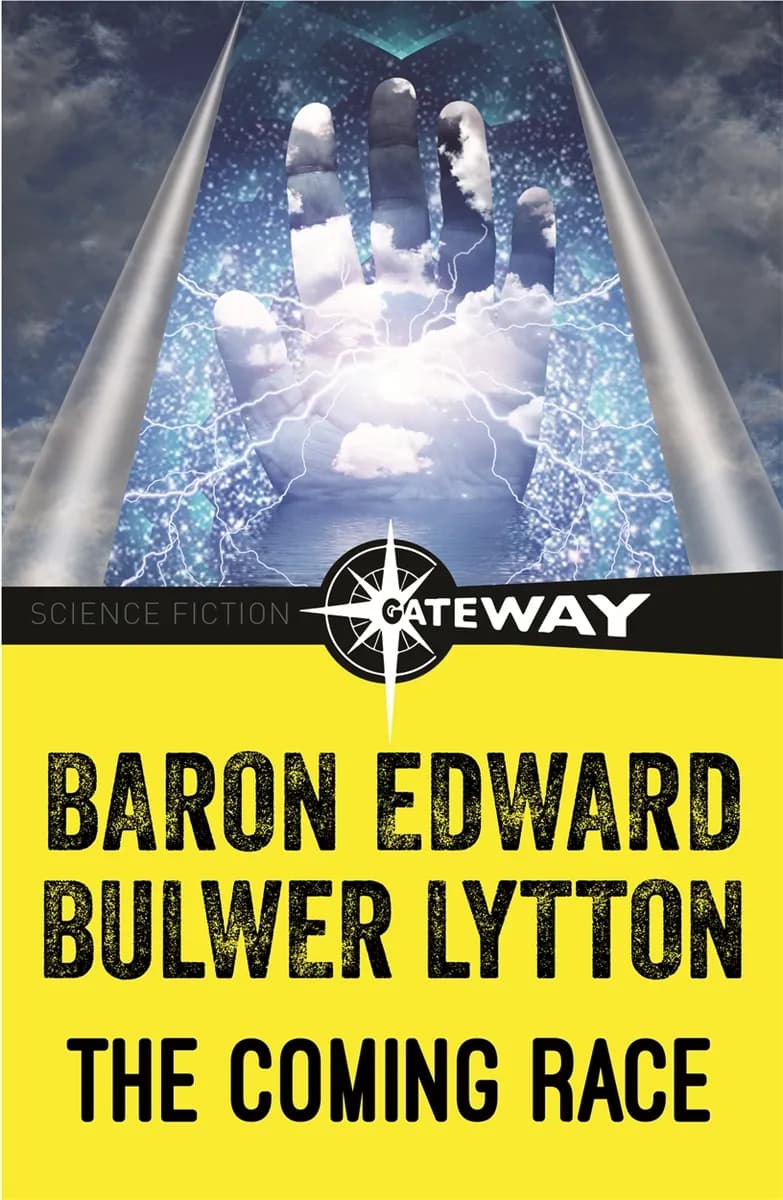 The Coming Race
Even republican writers have agreed that a benevolent autocracy would insure the best administration, if there were any guarantees for its continuance, or against its gradual abuse of the powers accorded to it. This singular community elected therefore a single supreme magistrate... held his office nominally for life, but he could seldom be induced to retain it after the first approach of old age. There was indeed in this society nothing to induce any of its members to covet the cares of office. No honours, no insignia of higher rank, were assigned to it. The supreme magistrate was not distinguished from the rest by superior habitation or revenue. (Ch IX)
The Coming RaceHappiness is the end at which they aim, not as the excitement of a moment, but as the prevailing condition of the entire existence; and regard for the happiness of each other is evinced by the exquisite amenity of their manners. (Ch. XV)
The Coming RaceIn prayer they address Him by a name which they deem too sacred to confide to a stranger, and I know it not. In conversation they generally use a periphrastic epithet, such as the All-Good. (Chapter XII)
The Coming RaceI had no doubt that Zee could have brained all the Fellows of the Royal Society, one after the other, with a blow of her fist. Every sensible man knows that it is useless to argue with any ordinary female upon matters he comprehends; but to argue with a Gy seven feet high upon the mysteries of vril, —as well argue in a desert, and with a simoon! (Ch. XVI)
The Coming RaceThere was...much the same compact...“Stay or go, according as our habits and regulations suit or displease you.” But though there were no laws such as we call laws, no race above ground is so law-observing. Obedience to the rule adopted by the community has become as much an instinct as if it were implanted by nature. (Ch IX)
The Coming RaceThe researches of the sages are not confined to such subtle or elegant studies. They comprise various others more important, and especially the properties of vril, to the perception of which their finer nervous organisation renders the female Professors eminently keen. (Ch IX)
The Coming RaceNow, in this social state of the Vril-ya, it was singular to mark how it contrived to unite and to harmonise into one system nearly all the objects which the various philosophers of the upper world have placed before human hopes as the ideals of a Utopian future. It was a state in which war, with all its calamities, was deemed impossible, — a state in which the freedom of all and each was secured to the uttermost degree, without one of those animosities which make freedom in the upper world depend on the perpetual strife of hostile parties. (Chapter XXVI)
The Coming RaceMechanical inventions, constructed on the principles that baffled my research to ascertain, worked by an agency infinitely more powerful and infinitely more easy of management than aught we have yet extracted from electricity or steam, with the aid of children whose strength was never overtasked, but who loved their employment as sport and pastime, sufficed to create a Public - wealth so devoted to the general use that not a grumbler was ever heard of. (Chapter XXVI)
The Coming RaceMachinery is employed to an inconceivable extent in all the operations of labour within and without doors, and it is the unceasing object of the department charged with its administration to extend its efficiency. (Ch IX)
The Coming RaceMy father died shortly after I was twenty-one; and being left well off, and having a taste for travel and adventure, I resigned, for a time, all pursuit of the almighty dollar, and became a desultory wanderer over the face of the earth.
The Coming RaceIt was a dark and stormy night; the rain fell in torrents — except at occasional intervals, when it was checked by a violent gust of wind which swept up the streets (for it is in London that our scene lies), rattling along the housetops, and fiercely agitating the scanty flame of the lamps that struggled against the darkness.
 Paul Clifford

