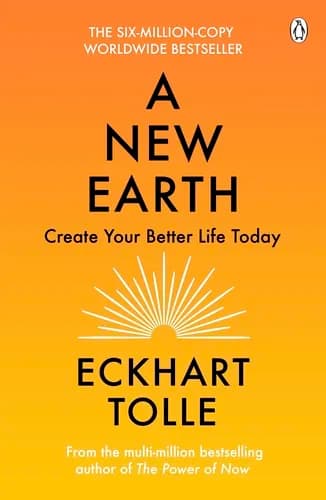
Eckhart Tolle
Quotes
Although body identification is one of the most basic forms of ego, the good news is that it is also the one that you can most easily go beyond.
You realize your true identity as consciousness itself, rather than what consciousness had identified with. That's the peace of God.
“I am the way and the truth and the life.” These words uttered by Jesus are one of the most powerful and direct pointers to the Truth, if understood correctly. If misinterpreted, however, they become a great obstacle. Jesus speaks of the innermost I Am, the essence identity of every man and woman, every life form, in fact. He speaks of the life that you are. Some Christian mystics have called it the Christ within; Buddhists call it your Buddha nature; for Hindus, it is Atman, the indwelling God. When you are in touch with that dimension within yourself – and being in touch with it is your natural state, not some miraculous achievement – all your actions and relationships will reflect the oneness with all life that you sense deep within.
This phenomenon must have been familiar to St. Paul, who used the expression “the peace of God which passeth all understanding.”
As tribal cultures developed into the ancient civilizations, certain functions began to be allotted to certain people: ruler, priest or priestess, warrior, farmer, merchant, craftsman, laborer, and so on... Your function became a role, but it wasn't recognized as a role: It was who you were, or thought you were.
Not everybody who experiences great loss also experiences this awakening, this dis-identification from form. Some immediately create a strong mental image or thought form in which they see themselves as a victim, whether it be of circumstances, other people, an unjust fate, or God. This thought form and the emotions it creates, such as anger, resentment, self pity, and so on, they strongly identify with, and it immediately takes the place of all the other identifications that have collapsed through the loss.
The physical needs for food, water, shelter, clothing, and basic comforts could be easily met for all humans on the planet, were it not for the imbalance of resources created by the insane and rapacious need for more, the greed of the ego. It finds collective expression in the economic structures of this world, such as the huge corporations, which are egoic entities that compete with each other for more. Their only blind aim is profit.
Only rare beings at the time, such as the Buddha or Jesus, saw the ultimate irrelevance of caste or social class, recognized it as identification with form and saw that such identification with the conditioned and the temporal obscured the light of the unconditioned and eternal that shines in each human being.
Whenever tragic loss occurs, you either resist or you yield. Some people become bitter or deeply resentful; others become compassionate, wise, and loving. Yielding means inner acceptance of what is. You are open to life. Resistance is an inner contraction, a hardening of the shell of the ego.
Complaining is one of the ego's favorite strategies for strengthening itself. Every complaint is a little story the mind makes up that you completely believe in. Whether you complain aloud or only in thought makes no difference. Some egos that perhaps don't have much else to identify with easily survive on complaining alone. When you are in the grip of such and ego, complaining, especially about other people, is habitual and, of course, unconscious, which means you don't know what you are doing.
Most people are so completely identified with the voice in the head – the incessant stream of involuntary and compulsive thinking and the emotions that accompany it – that we may describe them as being possessed by their mind. As long as you are completely unaware of this you take the thinker to be who you are.
Some egos... If they cannot get positive attention, they may seek negative attention instead, for example, by provoking a negative reaction in someone else.