
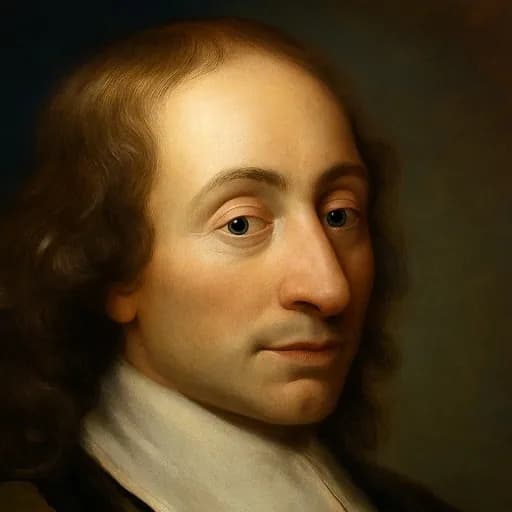
...when we wish to demonstrate a general theorem, we must give the rule as applied to a particular case; but… — Blaise Pascal
...when we wish to demonstrate a general theorem, we must give the rule as applied to a particular case; but if we wish to demonstrate a particular case, we must begin with the general rule. For we always find the thing obscure which we wish to prove, and that clear which we use for the proof; for, when a thing is put forward to be proved, we first fill ourselves with the imagination that it is therefore obscure, and on the contrary that what is to prove it, is clear, and so we understand it easily.
Source: Wikiquote · CC BY-SA 4.0

More from this book
Man is only a subject full of error, natural and ineffaceable, without grace. Nothing shows him the truth. Everything deceives him. These two sources of truth, reason and the senses, besides being both wanting in sincerity, deceive each other in turn. The senses mislead the reason with false appearances, and receive from reason in their turn the same trickery which they apply to her; reason has her revenge. The passions of the soul trouble the senses, and make false impressions upon them. They rival each other in falsehood and deception.
The eternal silence of these infinite spaces frightens me.
Men never do evil so completely and cheerfully as when they do it from religious conviction.
